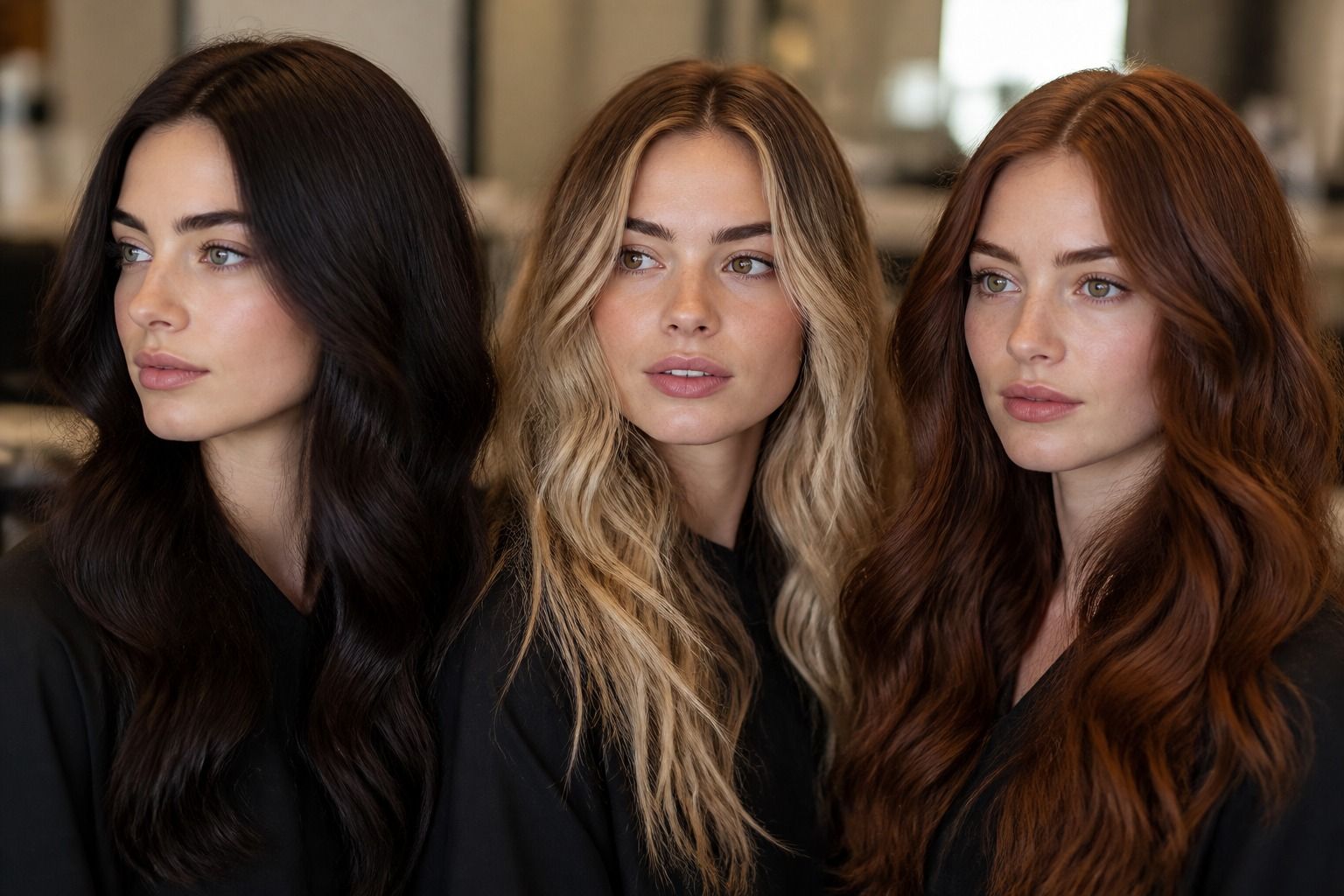
Hair colour analysis is most useful when it gives you language for a real salon conversation. It should help you describe the direction you want without forcing you to guess a code, a season, or a shade name you do not fully understand. A colorist also needs to know the less glamorous facts: what is on the lengths, how often you wash, whether you heat-style, and how much visible regrowth you can tolerate. The aim is a colour plan that suits your features and your routine, not a label that sounds precise but falls apart once it meets your starting point.
Bring observations instead of a label
Before the appointment, notice what happens around your natural root. Compare it with your brows and the clearest parts of your eyes in ordinary daylight. Does a softer shade make the face look calmer, or does it make everything disappear? Does a deeper shade give the eyes definition, or does it pull attention away from the haircut? These observations are more useful than arriving with a single statement such as I am definitely cool or I need a true ash.
Take photographs without relying on a beauty filter, and include one showing the hair in its current condition. If the lengths are faded, brassy, porous, or marked by old highlights, say so before the colorist starts looking at inspiration images. Bring references with similar lighting and a comparable starting depth. A pale blonde on a person with fine, untreated hair may not be a realistic guide for a dense dark base with several previous colour services. Keep one reference for the cut as well, because a colour that looks gentle in long waves may look much harder on a sharp fringe or a short bob.
Ask about shade family and depth
Shade family answers the question of direction: warm, cool, neutral, beige, copper, red, or another broad group. Depth answers how light or dark that group will appear. Ask the colorist to separate those two choices. You may like the coolness of a reference image but need a deeper version because a pale result would make the brows look too strong. You may like the depth of a brunette image but need a less saturated or more neutral formula to keep the face from looking heavy.
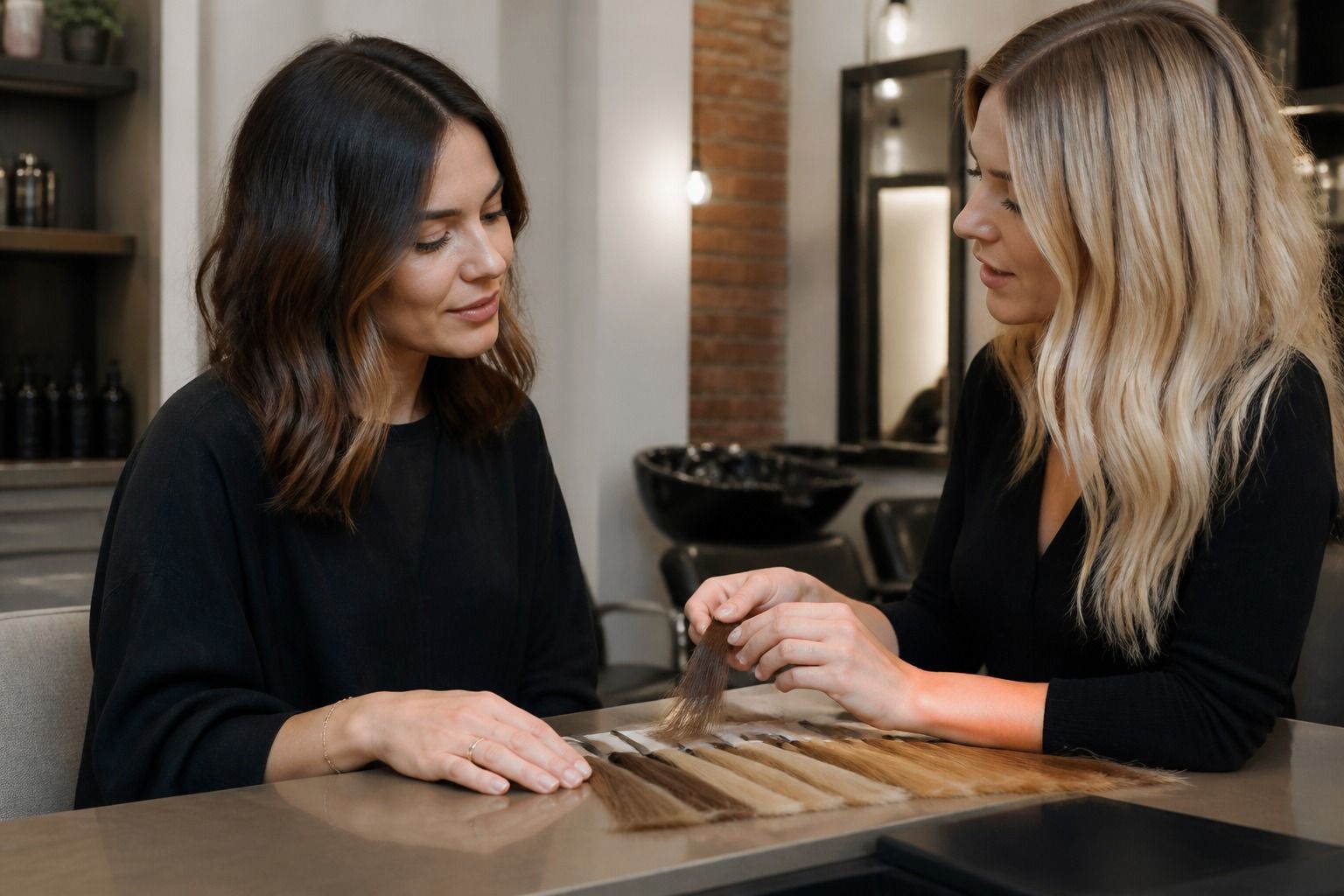
Swatch books are helpful when you compare them in the context of your own hair. Hold a swatch near the root and near the mid-lengths, rather than only against the skin. The same shade can read differently beside a natural root, a previously lightened end, or a vivid piece around the face. Ask which part of the result will be permanent and which part will be a toner or gloss that softens with washing. That distinction changes both the first appointment and the later budget. If two options look similar on the swatch, choose the one with the more manageable grow-out rather than relying on the name alone.
Explain what your current colour is doing
Previous dye history is not a minor detail. Permanent colour generally cannot lift an old permanent colour in the simple way people hope, and a dark box dye may need a carefully controlled process before a lighter direction is possible. Bleached hair may accept a toner quickly but lose it quickly too, especially at porous ends. A red or copper history can remain visible under a neutral brown even when the surface looks close immediately after the appointment.
Describe the timeline in plain terms: when the last permanent colour was applied, whether any highlights were done, which products were used at home, and whether the hair has been chemically straightened or permed. If you are unsure, bring the packaging or a photograph of it. Do not hide an old service because you think it will make the consultation harder. It is safer for the colorist to adjust the plan before a strand test than to discover the history halfway through a large change. Mention where the old colour is strongest, since a root, a porous mid-length, and a bleached end may need three different expectations.
Use a strand test before committing
A strand test is a small preview of both colour and behaviour. It can show whether the hair lifts evenly, whether a toner grabs too strongly on porous sections, and whether the chosen depth looks balanced beside the root. It cannot reproduce the whole head perfectly, but it gives the colorist evidence that a reference photo cannot provide. This is especially valuable when the goal is much lighter, much cooler, or much more saturated than the current colour.
Look at the test after it is dried and viewed in more than one light. Wet hair appears darker, and salon lighting can hide a cast that becomes obvious beside a window. Ask how the test is expected to fade, not just whether you like the immediate result. If the hair feels rough, stretches unusually, or breaks during handling, pause the colour plan. A slightly slower direction is better than chasing a shade that leaves the haircut difficult to style. You can still change the direction after the test; it is easier to do so before every section has been processed.
Leave with a maintenance plan
Ask what the colour will look like at the root, after the first wash, and at the point when you are ready for the next visit. A root melt may make a lighter result easier to live with, while a crisp all-over colour can look immaculate but demand a shorter appointment cycle. A cool tone may need a gloss or a carefully chosen shampoo, but purple shampoo cannot repair an uneven lift or replace a toner. Get the actual recommendation rather than assuming a product will solve every change.
Match the upkeep to the haircut and your habits. Short cuts reveal the perimeter and regrowth quickly; long layers can hide a softer transition but may need different placement at the front. If you air-dry, ask whether the shade still has enough dimension without a salon blow-dry. If you swim, use heat tools, or wash daily, mention it. Good hair colour analysis ends with a plan you can maintain: the target shade, the expected fade, the next service, and the small daily choices that keep the result looking like your own hair. Before you leave, repeat the plan in your own words and ask what would make the colorist change it at the next visit. That final check prevents a beautiful first result from becoming a confusing maintenance routine.