When people talk about color analysis hair, they often jump straight to eye colour or a list of seasonal shades. That misses the part I notice first in a salon mirror: the relationship between the hair, the brows, and the overall depth of the face. A shade can be technically cool or warm and still look wrong if it makes the brows disappear, turns the eyes flat, or creates a hard regrowth line. Facial contrast gives you a more useful starting point because it describes how much visual difference your features can comfortably carry.
Why contrast matters more than a single feature
Eye colour is easy to focus on because it is visible and memorable. Blue eyes invite a dozen recommendations about ash blonde, while brown eyes are often pushed toward warm brunette. In practice, the same eye colour appears in faces with very different brow depth, skin value, and natural hair. A pale blue eye beside dark brows has a different effect from a pale blue eye beside light brows. The colour of the iris matters, but it is one part of the picture.
Try a simple mirror check with your hair pulled back. Look at the difference between the darkest feature and the lightest area around it. If your brows are only a little deeper than your skin and your natural hair has a gentle value, you may have low contrast. The face tends to look calm when the hair stays within a nearby depth. A dramatic black-brown can arrive before the eyes do, even when the undertone is flattering.
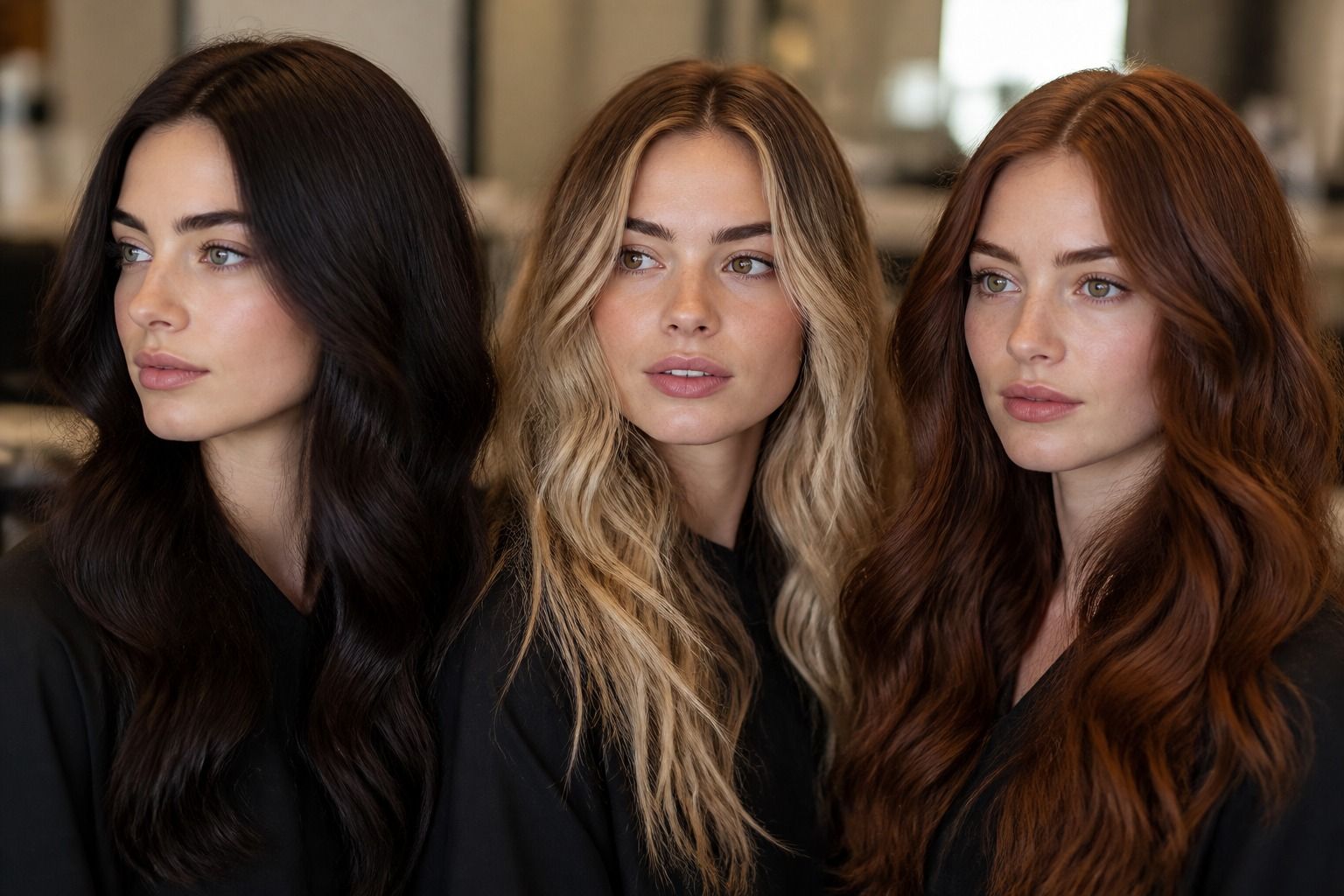
Medium contrast gives you more room. A medium brunette, a muted copper-brown, or a soft lightening around the face may work because the change has somewhere to sit between the brows and the skin. High contrast can handle clearer differences, such as dark hair with pale skin or a bright face frame against a deeper base. The point is not to assign yourself a permanent label. It is to see how much distance between colours feels like you.
I find black-and-white phone photos useful for this check. Colour can distract you with its temperature, while a grayscale image shows depth. If the hair becomes a heavy block and the features look small, lower the depth or soften the placement. If the hair and face merge into one pale shape, you may need more root depth or a stronger brow balance.
Check brows and roots before eyes
Brows are the quiet frame of the face. They sit close to the eyes, so a hair colour that ignores them can make the whole result feel off even when the lengths look beautiful. Before choosing a shade, compare the natural brow colour with the root at the parting. A warm medium brown brow beside a very grey blonde may need a little definition in the hair or a softer beige toner. A cool dark brow beside a honey gloss may need a deeper root to stop the face from looking disconnected.
Look at the regrowth line in daylight rather than under a salon lamp. The first few centimetres tell you what your face is used to seeing every day. If your natural root is a muted dark blonde, taking the lengths to a very pale, clean blonde creates more upkeep than the name of the shade suggests. The contrast returns at the parting every few weeks. A rooted blonde or a shadow that stays close to the brow depth can make the same light lengths easier to live with.
| Feature relationship | Hair direction to test | What to watch in the mirror |
|---|---|---|
| Light brows and gentle natural root | Muted blonde, soft beige, light mushroom | The shade should not erase the brows or make the eyes look grey. |
| Medium brows with medium natural depth | Neutral brunette, ash brown, restrained face frame | Keep the light pieces close to the existing value around the face. |
| Dark brows and a clear natural root | Deep brunette, cool espresso, high-contrast pieces | Check that the hair supports the brows instead of competing with them. |
There is no rule that says brows must match the hair exactly. Matching can look painted on, especially when the hair has several tones. I prefer a shared direction: cool with cool, soft with soft, or clear with clear. A one-step difference usually feels more believable than identical colour across brows, roots, and lengths.
Choose a change that keeps the face in focus
The most wearable colour change often happens where the eye naturally lands. If your face has low contrast, a full head of very dark colour may dominate before the haircut has any chance to show. A softer route is to keep the base near the natural hair and add movement through a gloss, a few lowlights, or fine pieces around the cheekbones. The colour still changes, but the face remains the first thing you see.
With medium contrast, the placement matters as much as the shade. A blunt bob can make a single flat colour look stronger because the line is so clear. The same colour in long layers may appear gentler as it breaks across the ends. If you are changing both cut and colour, ask which one should make the statement. When the haircut has a sharp jaw-length line, a quieter tone often gives the result room to breathe.
High contrast faces can carry a stronger base, though clear does not mean harsh. A blue-black colour may look impressive in a photograph and severe at a breakfast table. A cool espresso, deep neutral brown, or dark shade with a subtle reflective gloss can keep the depth while avoiding a solid, inky effect. I would test the darkest option as a temporary gloss or a digital mock-up before committing to permanent colour.
Face-framing pieces deserve their own check. Place a section near the cheek and look from a normal speaking distance, not with your nose almost touching the mirror. Too-light pieces can underline redness or make the skin look tired. Too-dark pieces can close in the eyes. A small change in width, toner, or starting point can matter more than going another level lighter.
Use highlights without breaking the balance
Highlights work best when they repeat something that already exists in the face. For low contrast, that might mean fine ribbons only one or two levels lighter than the base. They give the hair surface movement without drawing a bright stripe beside the eyes. Beige, mushroom, muted honey, and soft ash can all work when the intensity stays close to the natural depth.
For medium contrast, you can vary the distance between the base and the light pieces. A few brighter sections through the front can make the eyes look clearer, while lowlights through the interior stop the lengths from turning flat. This is where many salon photos mislead people: a freshly styled head can show the highlights beautifully, but an everyday ponytail reveals whether the contrast is spread through the hair or concentrated in two pale panels.
High contrast hair can take brighter pieces, yet placement still controls the result. Strong highlights beside a dark root may create a graphic look that suits a sharp cut. If you want something quieter, ask for a broken pattern with darker sections left between the lights. The hair will move when you do, and the eye will read depth instead of a row of stripes.
Warmth should be judged against the skin and the brows, not against a swatch in isolation. A toner that looks neutral in the bowl can read yellow on porous ends. Conversely, an ash toner can look greenish when placed over hair with leftover yellow. Save a photo of your natural root and show it beside the colour reference. That gives the colourist a better anchor than a filtered picture of somebody else.
Test the result in ordinary lighting
Salon lighting is designed to let hair look polished. It is useful for seeing shine, but poor for predicting every day. Before you approve a colour, stand near a window, then move into a room with warm lamps. Check the parting, the hairline, and the section below the ears. A colour that works only when the hair is curled and lit from above needs another conversation.
Wear the brow colour and makeup you normally use, or skip makeup if that is your usual face. Heavy eye makeup can make almost any contrast look deliberate. A plain T-shirt in a neutral colour also helps. Take one photo from the front and one from the side. The side view shows whether a face frame turns into a pale shelf or blends through the layers.
Movement is the last test. Shake the hair loose, tie it back, and part it on the other side. Look at the regrowth line after washing, not only after a salon blow-dry. Good color analysis hair advice should survive these ordinary moments. If the shade still supports your brows, keeps the eyes visible, and sits comfortably beside the natural root, the choice is probably sound. If one feature keeps demanding attention, change the contrast or placement before changing the entire colour family.
Hair colour is easier to refine when you treat it as a relationship rather than a label. Your eyes can guide the direction, your undertone can rule out extremes, and your brows and roots show how much contrast the face already carries. From there, the most useful choice is the one that still looks balanced when the light is bad, the hair is straight, and the appointment feels like a week ago.