When blonde hair, blue eyes, and fair skin meet, clothing colour can either let the hair look bright and deliberate or make the whole face feel washed out. The answer is rarely one universal “best” colour. It depends on whether the blonde is creamy, ash, beige, or golden, how dark the brows are, and whether the haircut creates a soft frame or a strong line around the face. Start with the hair, then use the outfit to support its undertone and contrast.
Read the hair before choosing the wardrobe
Blonde is not one colour. A cool ash blonde often sits comfortably beside soft blue, mauve, pewter, and blue-grey, while a warmer honey blonde may look more coherent with cream, muted sage, camel, or a softened coral. If the hair has been toned very cool, a bright orange top can make the lengths appear grey by comparison. If the hair is warm and reflective, icy pastels may create a sharper contrast than you intended.
Look at the parting and the face frame first. Hair closest to the forehead and temples influences the colour around the eyes more than the back of the head does. A blunt blonde bob creates a clear pale shape, so a similarly pale top can make the face recede. Long layered hair distributes the lightness over the shoulders, which gives you more freedom to use a deeper neckline or a stronger colour near the face.
Brows are the quiet anchor in this combination. Very light blonde hair with medium brown brows can carry more contrast than the phrase “fair colouring” suggests. A dark navy sweater may look balanced, while a pale beige top may erase the space between hair, skin, and fabric. Check the hair, brows, and neckline together in a window photograph. A single close-up of the eyes is not enough to judge the full effect.
Soft colors for low contrast
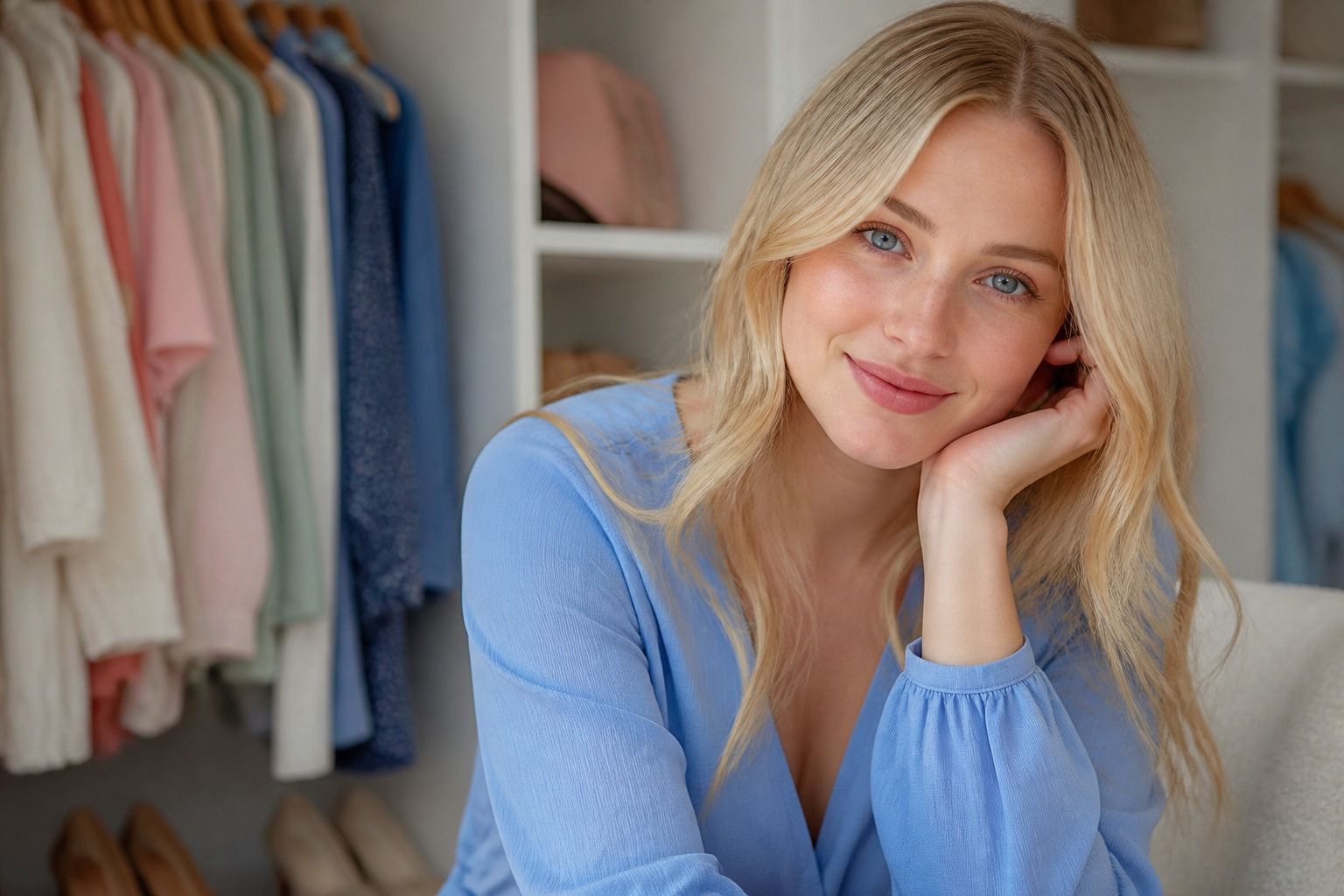
Soft blue is an obvious starting point for blue eyes, but the exact blue matters. A dusty denim, misty blue, or greyed periwinkle usually keeps the focus on the eyes without making the hair look yellow. Very bright electric blue can be flattering when the blonde is clear and the haircut is sharp, yet it may overpower fine pale hair or a loose, softly layered style.
Mauve and cool rose are useful when blue feels predictable. They add colour beside fair skin without creating a hard boundary against an ash or beige blonde. Sage can work in the same way, especially when the hair has a neutral or slightly warm blonde base. If sage makes the skin look greenish, move toward a greyed eucalyptus tone or keep the colour lower in the outfit so it does not sit directly under the chin.
| Hair and contrast clue | Colour to try near the face | Hair detail it supports | When to adjust |
|---|---|---|---|
| Ash or beige blonde with soft brows | Dusty blue, mauve, or blue-grey | Loose layers and air-dried texture | Choose a deeper version if the face looks flat |
| Honey blonde with warm shine | Cream, muted sage, or soft teal | Golden movement through waves | Avoid icy grey if it makes the hair look brassy |
| Very pale blonde with a blunt cut | Medium navy, berry, or clear blue | Clean bob, fringe, or defined part | Use a softer neckline if black feels too severe |
| Blonde hair with medium-dark brows | Deep blue, charcoal, or muted green | Visible root and face-framing pieces | Balance strong colour with a lighter neckline shape |
Soft colour should not mean colourless. The useful test is whether the fabric has enough difference from the skin and hair to show the haircut. A pale blue top with a pale blonde bob can be beautiful, but adding a darker collar, a visible necklace, or a slightly deeper blue may stop the whole area from becoming one light shape. The decision is about framing, not about avoiding pale colours.
Deeper colors for a stronger blonde
Deeper clothing colours can make blonde hair look cleaner because they provide a background for it. Navy is usually easier to wear than pure black, particularly with fair skin and cool or neutral blonde hair. It gives blue eyes a darker field without creating the stark edge that black can produce. Charcoal, slate, deep teal, and a cool berry can do something similar while bringing out different parts of the hair’s reflection.
Black is not forbidden, but it has to agree with the haircut. A sleek blunt bob, strong fringe, or high-contrast root can carry black close to the face. Very fine pale hair in a soft, undone cut may look disconnected from a black crew neck because the outfit supplies all the visual weight. In that case, a V-neck, open collar, or lighter layer beneath the black can create a gradual transition around the hairstyle.
Dark colour can also expose unwanted warmth in blonde hair. A honey blonde may look richer beside chocolate brown or warm olive but slightly orange beside blue-black. An ash blonde may look beautifully crisp beside navy but dull beside a yellow-based mustard. Take note of the hair in natural light, not just the label of the garment. Two navy fabrics can have different undertones, and one may make the lengths look silver while the other makes them look tired.
If your hair has a bright face frame, place the strongest clothing colour a little lower. A dark jacket over a light top can preserve contrast without putting a hard band directly under the jaw. This is particularly useful when the hair is cut into a chin-length bob or a short layered shape, where the neckline and ends meet in the same small area.
Use the neckline to frame the hairstyle
Neckline shape changes the way hair colour is seen. A high crew neck creates a solid block beneath a bob, while a V-neck opens a channel that lets the face and hairstyle remain the focus. A boat neck follows the line of shoulder-length hair and can look elegant with soft waves, but it may compete with a wide face frame if the fabric colour is close to the hair.
Think about where the ends of the haircut land. Hair that stops at the jaw meets a high neckline quickly, so the contrast between fabric and hair becomes part of the cut’s silhouette. A dark blunt bob against a cream knit can look graphic and clean. A pale layered lob against a dusty blue top may look more blended. Neither is automatically better; the question is whether the edge feels deliberate.
Collars and open shirts give you more control than a fixed crew neck. You can place a lighter or darker panel near the face, then let the outer layer supply the contrast. This helps when the hair colour is in transition, such as blonde lengths growing out into a darker root. The collar can echo the root depth without forcing you to choose a top that matches the entire head.
Accessories should support the hair rather than distract from it. A small dark pendant can give a pale blonde cut a visual anchor, while a bright scarf may be enough to connect a warm blonde to a cooler top. Keep the test simple first: hair in its normal part, usual styling, one neckline, and no dramatic lighting. The most useful result is the one that still looks right when the hair is not freshly arranged.
Test colors away from dressing-room lighting
Fitting-room lights are often too warm, too overhead, or both. They can make ash blonde look greenish, golden blonde look brighter than it is, and fair skin look unusually pink. Step near the shop entrance or take a quick phone photo beside a window. Keep the camera at face height and include the hair from the part to the ends. This is a hair-colour test as much as a clothing test.
Compare the fabric with three versions of your hair: freshly brushed, normally styled, and loosely tied back. A top that looks good with waves may make a straight bob seem flat because the silhouette changes. A colour that suits a high ponytail may draw attention to darker roots when the hair is worn down. The garment does not need to work with every possible style, but it should work with the one you actually wear most.
Watch for specific signs rather than relying on a general feeling. Does the hair look brighter, or does the fabric simply look brighter? Do the blue eyes remain visible, or does the colour of the top become the first thing you see? Does the skin look clear beside the neckline? Is the blonde reflecting light evenly, or are the ends turning yellow or grey? These observations help you choose a nearby shade instead of abandoning an entire colour family.
The best clothing colors for blonde hair, blue eyes, and fair skin are the ones that leave room for the hair to have a shape. Start with its undertone, check the brow contrast, and then choose the neckline that gives the haircut a clean frame. Soft blue, mauve, sage, cream, navy, and charcoal can all work, but their success depends on where the blonde sits and how the hair falls. Dress the actual haircut in front of you, not an imagined version of it after a perfect salon blow-dry.