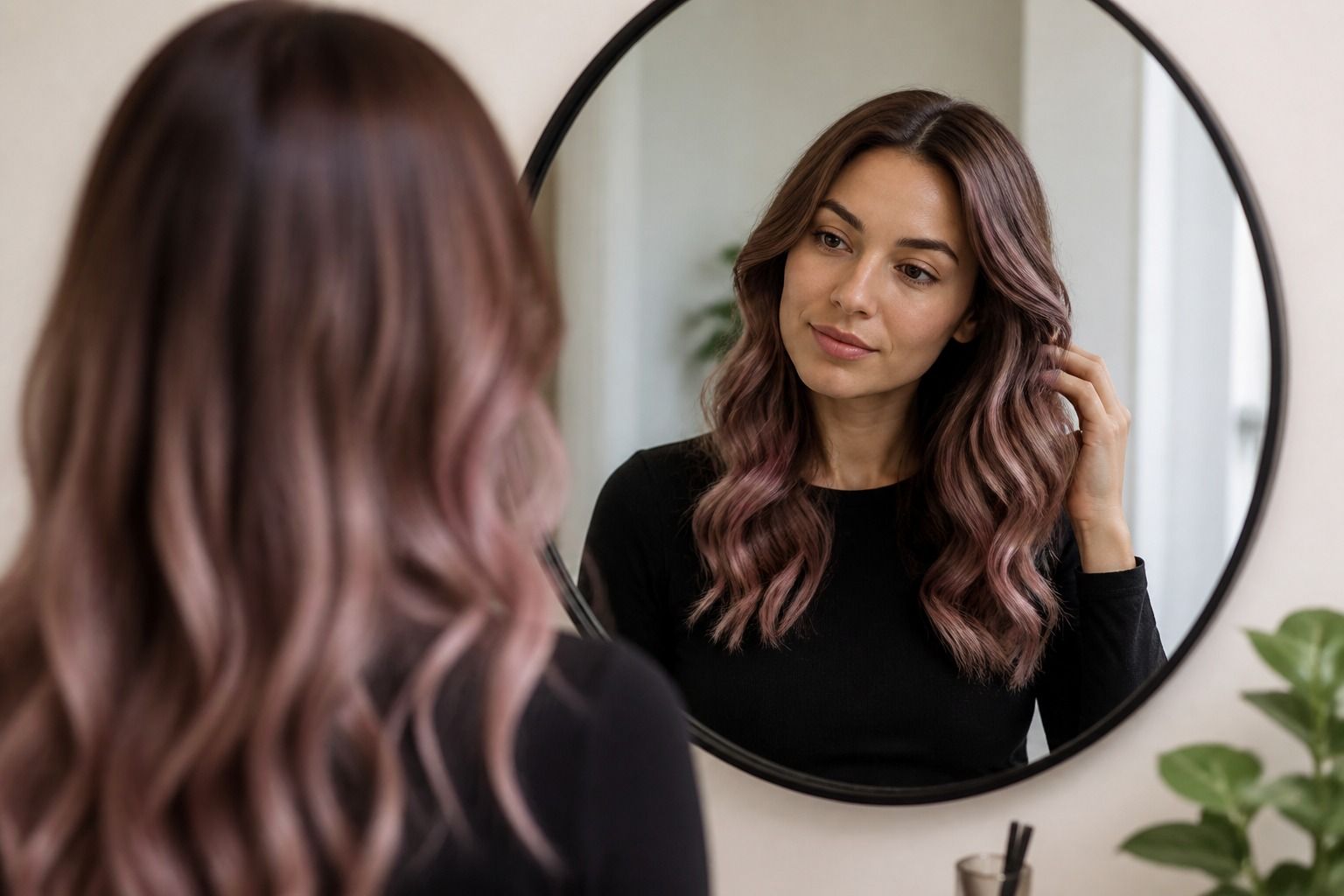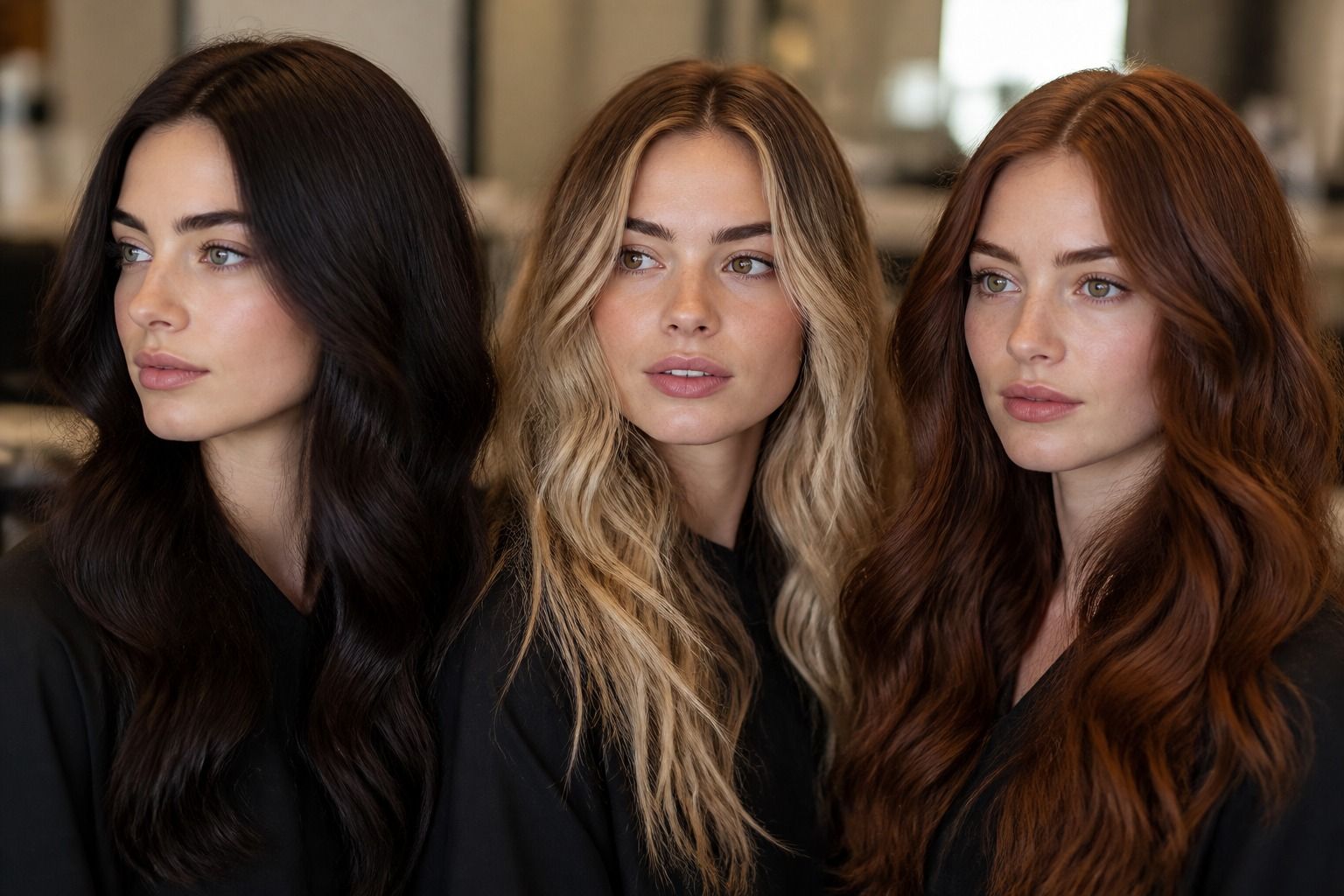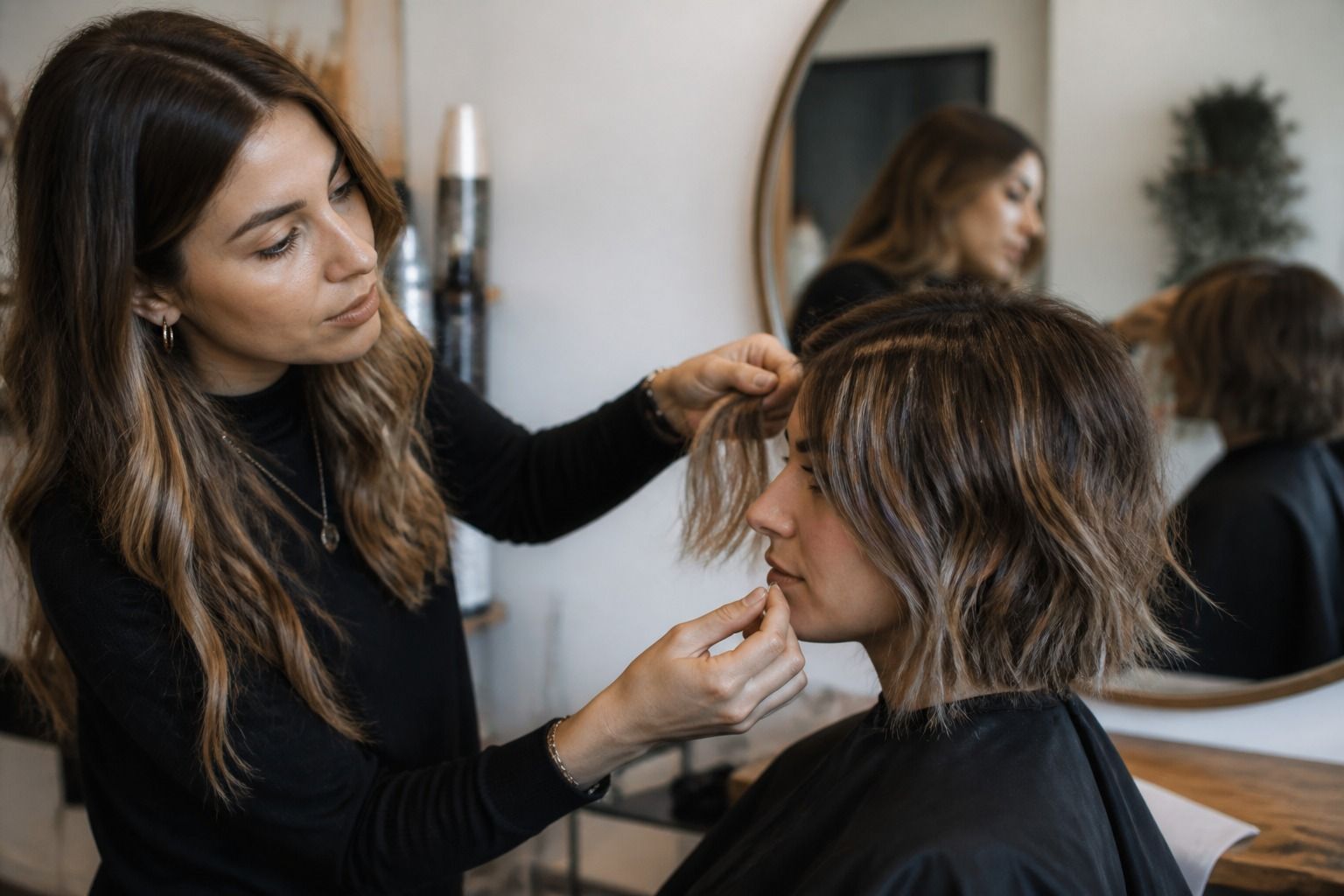
A haircut changes the way light moves through the hair, so a shade that looked balanced on long, heavy lengths can feel too dark, too bright, or too flat after the cut. That is why hair color analysis works best when it includes the shape you are actually going to wear. A blunt bob, a layered crop, and long face-framing pieces do not present color in the same way. The useful question is not simply which shade suits your skin. It is which combination of tone, depth, contrast, and movement will still look intentional when you style the hair on an ordinary morning.
Start with the cut you actually wear
Begin with the silhouette rather than a seasonal label. A sharp bob has a continuous edge, and that edge makes dark or highly saturated color look more graphic. If the line is cut at the jaw, a strong one-tone brunette can draw attention to the mouth and jawline at the same time. That may be exactly what you want, but it is a different effect from a softer medium brown with a little variation through the ends. On a bob, ask whether the color should support the clean outline or soften it.
Layers distribute light and shadow in a less predictable way. A long layered cut may show the base color near the crown, a lighter face frame near the cheekbones, and several short flashes at the ends when the hair moves. If you choose a shade only from a front-facing swatch, you can miss what the color will do in motion. Bring a photo of the haircut from the side as well as the front, and describe whether you usually wear it smooth, tucked behind the ears, or left with natural texture. Those details affect where a colorist should place brightness.
Separate undertone from depth
Undertone describes the direction of a color: warm, cool, or neutral. Depth describes how light or dark it is. They are related, but they are not the same decision. A cool medium brown can be easier to wear than a very pale ash blonde if your natural contrast is moderate. A warm shade can also be adjusted in depth; a light honey tone and a deep copper brown may share warmth while creating very different pressure around the face.
When doing color analysis hair checks at home, compare your natural roots, brows, and eyes in daylight before looking at dyed lengths. Previous color can make the ends look cooler, warmer, or more muted than your natural coloring. Hold a neutral gray or cream top near the face and look for changes in the skin rather than trying to name a perfect undertone. If the skin looks clearer and the eyes look more defined, the direction is probably useful. If every shade seems to make the face look gray, yellow, or tired, the issue may be lighting or old dye rather than your coloring.
Use contrast to choose a believable change
Contrast is the difference between the lightest and darkest features around the face. A low-contrast face often looks harmonious with a smaller gap between root and ends. A medium-contrast face can carry dimension, but the transition needs to be visible without becoming stripey. High contrast can support a crisp dark base, a clear blonde, or a distinct face frame, provided the haircut has enough structure to carry it.
Think about the distance between a new color and your brows. If the hair becomes much lighter while the brows stay deep, the eyes may appear stronger and the face may look more defined. That can be flattering, but it will also make regrowth more obvious. If the hair becomes much darker than both brows and eyes, the hairstyle may become the first thing people see. There is no universal right answer; the point of hair color analysis is to predict the relationship so the change is deliberate.
Match the shade to the haircut shape
Color placement can either trace the haircut or fight it. A face frame placed beside cheekbone-length layers can make the movement visible, while the same bright section on a solid jaw-length bob may look like a stripe. On a long cut, soft brightness through the bends can make waves read as fuller. On fine hair, too many close shades can make the ends look busy and thin. The cut gives you the map; the color should make that map easier to read.
Consider where the hair parts. A centre part exposes the root and makes the first few inches of color especially important. A side part can hide a hard transition but may reveal uneven placement when the hair is moved. Bangs need their own decision: a solid fringe can look polished with a single shade, while airy curtain bangs may benefit from a slightly lighter edge. Ask for the result in the style you will use most, not only in the blow-dried salon finish.
Write a salon request that survives translation
A useful salon request includes the haircut, your usual styling, the current color history, and the amount of upkeep you can accept. Replace vague requests such as make me cooler or give me a natural blonde with a few observable details. You might say that you want a medium neutral-cool base, a soft transition at the root, and brightness that starts below the cheekbones because you wear the hair in loose layers. Include whether the ends contain box dye, permanent color, bleach, or a faded gloss. The colorist needs the starting point before choosing the destination.
Take two or three reference images that show the placement rather than only the shade. One should have a similar cut, one a similar starting depth, and one the level of contrast you like. Ask what will happen after six weeks, how the face frame will fade, and whether a toner or gloss will be needed. The best hair color analysis does not produce a magical name that removes all judgment. It gives you a clearer set of decisions, so the haircut and color continue to make sense together as the hair grows and the styling becomes your own. Write down the agreed shade direction, the expected fade, and the first maintenance appointment before you leave. Also ask which part of the result should still look good when you have no time to recreate the salon styling.