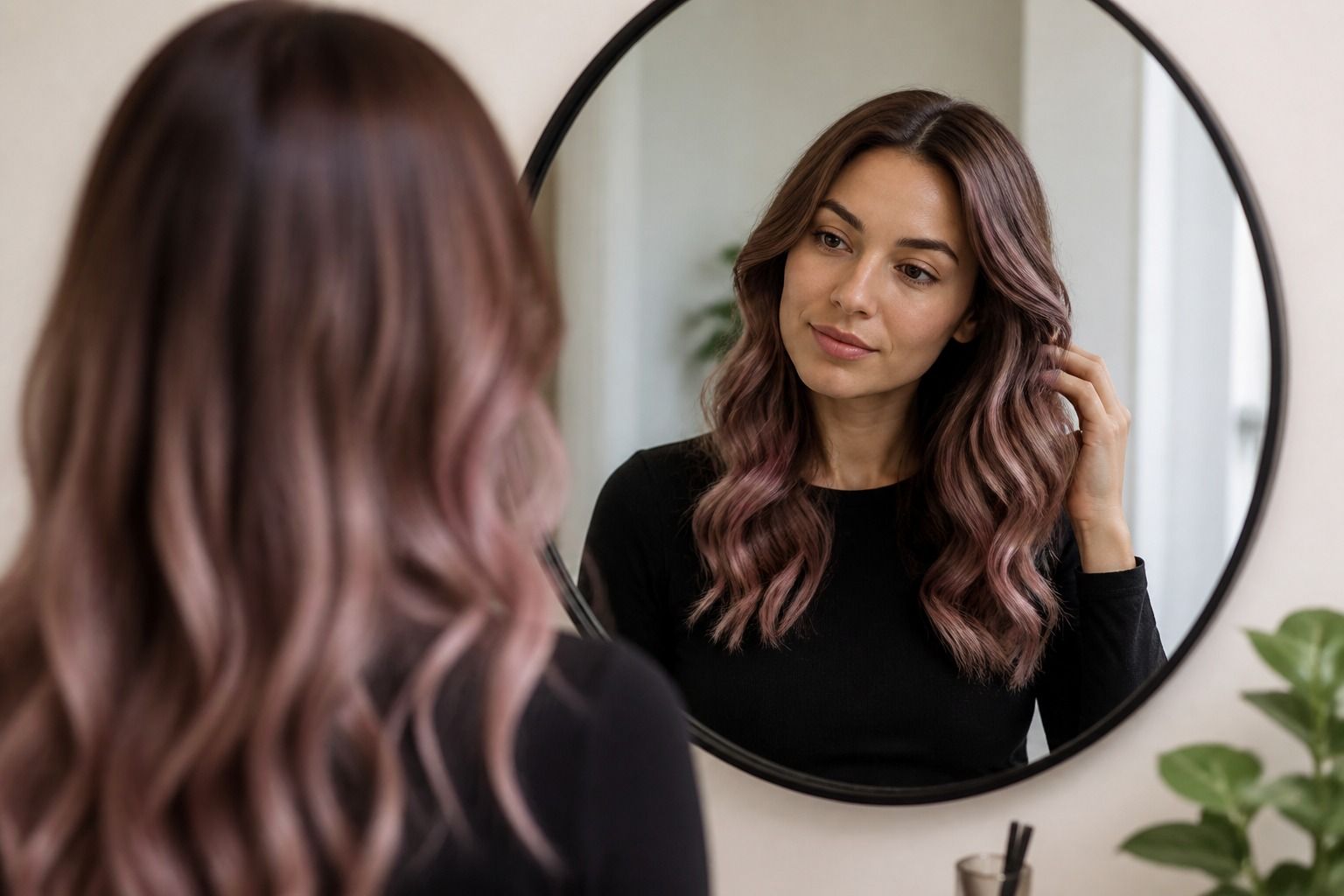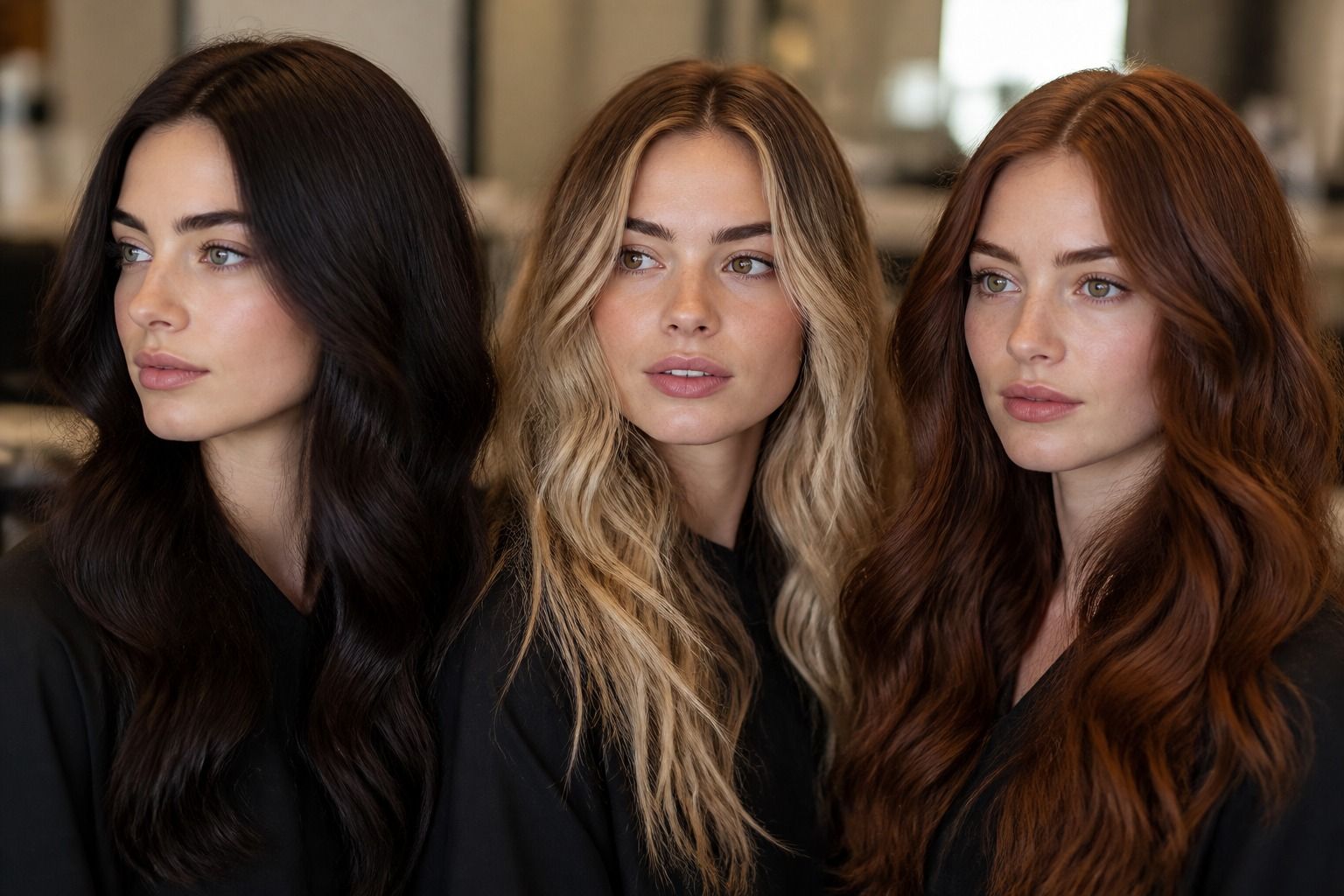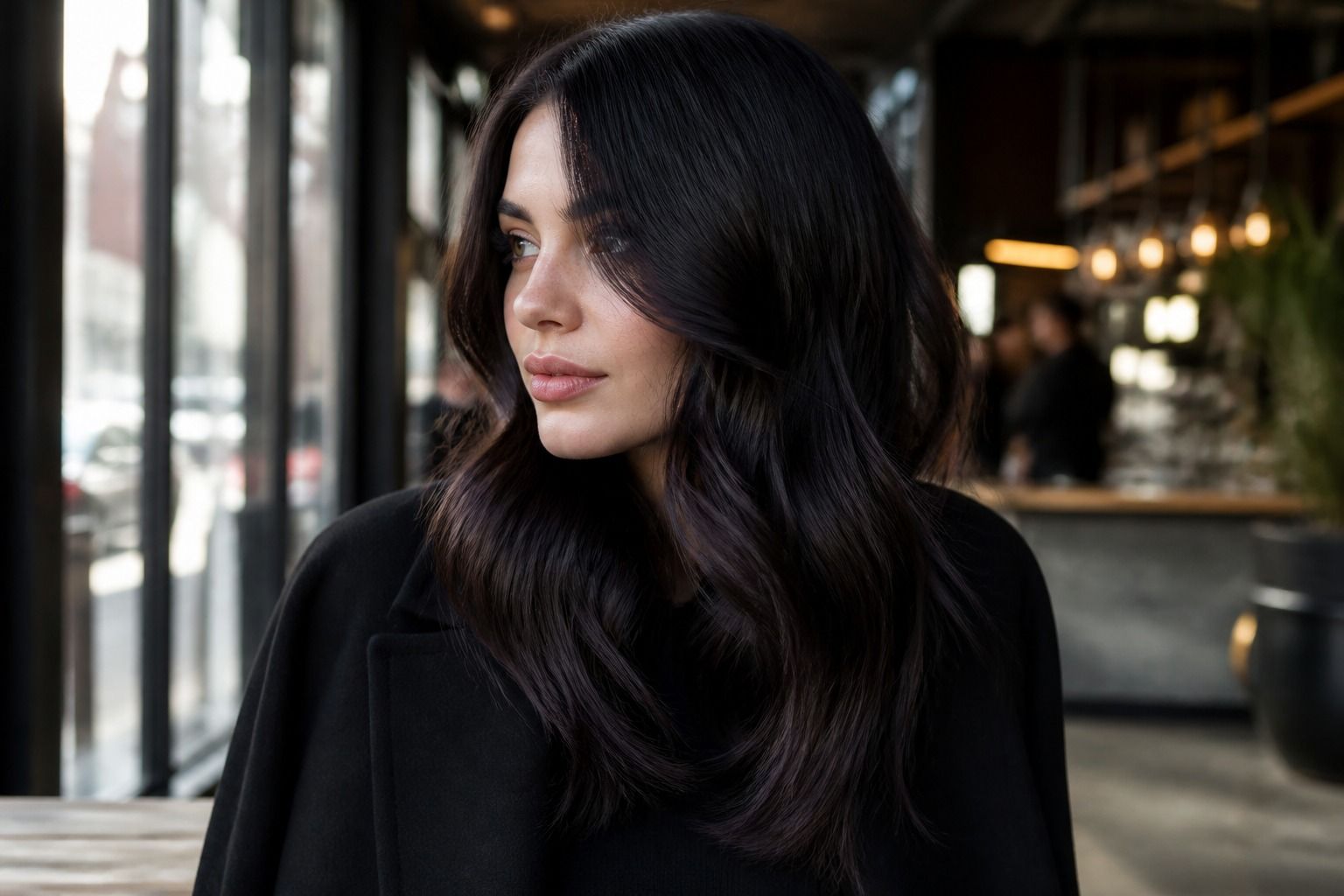
Cool winter hair colors have a certain directness: clear brunette, blue-black, icy blonde, cool red, and berry shades that do not disappear beside strong brows or bright eyes. The difficult part is not finding a dramatic colour. It is controlling the contrast so the hair looks sharp rather than heavy, and planning the grow-out before the first appointment is over. A strong shade should support your features and haircut on an ordinary day, not require perfect makeup and a fresh blow-dry to make sense.
When clarity matters more than softness
Some hair colours are attractive because they are hazy and blended. That is not always the right direction for a high-contrast face. If your natural brows, eyes, or lashes already create a defined frame, a muddy brown or heavily golden brunette can make the overall impression look tired. Cool winter colour usually benefits from clean edges and a controlled undertone: neutral-cool brown, espresso, ink brunette, blue-black, or a crisp light blonde when the hair can safely reach it.
Clarity does not mean choosing the darkest shade available. It means the colour has a visible point of view. A clear brunette can be deep without looking black, while a cool red can be vivid without turning orange. Ask for a swatch beside your face in daylight and then look at it with your hair pulled back. Salon mirrors often make every dark colour appear elegant; a phone photo near a window reveals whether the shade overwhelms the brows or makes the skin look dull.
Your natural contrast is also a useful boundary. If your hair is medium brown and your brows are soft, jumping directly to blue-black may create more drama than the rest of your colouring can carry. A deep neutral-cool brunette is a safer first step because it still has depth but leaves a little movement at the edges. If your features are already crisp, a stronger, more saturated shade may look deliberate rather than costume-like.
Choose a dark shade without losing dimension
Dark hair is often described as simple, but dark colour exposes poor placement. One flat layer of nearly black pigment can make a bob look like a solid cap, particularly when the ends are cut bluntly. Dimension does not require warm highlights. It can come from a slight shift between root and lengths, a cooler sheen through the surface, or a few deeper and lighter pieces that are close enough to remain unmistakably dark.
For a clear brunette, think about the difference between depth and opacity. Espresso can still reflect light. Blue-black can look glossy and graphic, but it has less room for error when the hair is dry or the cut has grown out. If you want a dark result with a softer return to your natural colour, ask whether a demi-permanent gloss or a carefully placed root shadow can create the effect. Permanent dark dye is not a casual experiment if you may want to become lighter later.
| Shade direction | Visual effect | Cut it supports | Main risk |
|---|---|---|---|
| Cool espresso | Deep, polished, and still reflective | Layered lob or smooth medium cut | Can look flat if the ends are overly porous |
| Blue-black | Graphic contrast with a blue surface sheen | Crisp bob, long blunt hair, or sharp fringe | Hard to lighten without significant damage |
| Ink brunette | Near-black depth with less obvious blue | Clean long layers and strong parting | May pull warm as it fades if the base is lifted |
| Cool dark red | High saturation with a softer edge than black | Textured bob or shoulder-length cut | Red pigment can stain and fade unevenly |
| Icy blonde | Maximum light-dark contrast around the face | Short graphic cuts or precise face frames | Lift, dryness, and visible regrowth |
Look at the ends before committing to depth. Porous hair can absorb a dark formula quickly and reflect almost no light, while healthy hair may show a clean glossy finish. A strand test is especially valuable if the lengths contain old highlights, box dye, or repeated toner. It is a small delay that can prevent the familiar salon surprise of “the colour is technically right, but my hair now looks like one dark piece.”
Use cool red and berry tones carefully
Cool red and berry shades are useful when black feels too severe but a soft brunette lacks energy. Cherry, cranberry, mulberry, and wine tones can keep the high-contrast effect while giving the face a little more colour. Their success depends on saturation. A muddy red-brown may fight with a clear complexion, whereas a clean berry glaze can look intentional even when it is subtle in indoor light.
Decide how visible you want the red to be in daylight. A brunette with a cherry reflect may look almost neutral in an office and noticeably red in the sun. A full berry colour is a different commitment because fading can expose uneven warmth through the ends. If you wash often, the first few weeks may be the most vivid; if you wash less but use hot tools, the surface may lose shine before the pigment fully disappears.
Face-framing placement matters. A bright red panel beside the cheek can be striking with a short, structured cut, but it can look accidental when it is left as a narrow stripe beneath long hair. For a first experiment, a gloss over a clear brunette or a few hidden berry pieces can show whether the undertone feels right. Watch the colour beside your natural brows. If the hair is vivid while the brows look dusty or grey, the balance may need a softer formula or a brow adjustment, not a brighter dye.
Match high contrast to the haircut line
A high-contrast colour and a high-contrast haircut reinforce each other. A blunt bob with a clean perimeter can carry blue-black or ink brunette because the shape gives the darkness an edge. The same colour on a heavily thinned, uneven cut may look dense at the roots and weak through the ends. Before choosing the shade, look at the silhouette from the side and back, not only the front-facing mirror view.
Strong bangs make the relationship even more obvious. A dark fringe creates a graphic frame, so a bright face frame may need to start farther back or be kept narrower. On a pixie or crop, a small amount of lighter texture can keep a deep shade from becoming a single block. On long hair, movement through the layers can provide enough dimension without adding warm highlights. The best placement follows the way the cut bends and separates.
Parting is another visual line. A centre part with dark roots can look sleek and deliberate, but it also exposes regrowth earlier. A side part breaks the symmetry and can make a root shadow more forgiving. This is not a reason to hide a poor transition. It is a reminder that the haircut, part, and colour are one design. A shade that works in a salon blowout must still work when the fringe is slightly bent and the ends are not perfectly aligned.
Plan damage control and grow-out
The most dramatic cool winter colour choices often have a technical price. Blue-black and deep brunette are less damaging to create on a light base, but they can be difficult to remove later. Icy blonde usually requires repeated lifting, and a bright cool red can demand frequent glossing if you want the saturation to stay clear. Decide which future options you want to keep before you make the current change.
If lightening is involved, do not schedule the haircut as an afterthought. Removing fragile ends may be part of the colour plan, especially around the face where repeated bleach creates the most visible breakage. Keep the first cut simple enough to survive a few weeks of air-drying. A polished bob with a dry fringe is not low-maintenance just because it is short; it may need regular trims and careful heat control to keep its line.
For grow-out, compare the new colour with the natural root in daylight and at the parting. A deep shade over a much lighter base may create a clear band as it fades. A softly shadowed root, a close level through the lengths, or a planned gloss appointment can keep the transition readable. Ask the stylist what happens at six weeks, not just what the colour looks like on the day. That answer should include fading, brow balance, trim timing, and the condition of the ends.
Cool winter hair colors are strongest when the contrast has a reason. Choose clarity when softness makes the face look blurred, add dimension when darkness becomes a block, and keep saturation where the haircut can support it. The goal is not to make every feature louder. It is to give the hair enough definition to meet the face halfway, with a maintenance plan that still feels sensible after the first shine has faded.