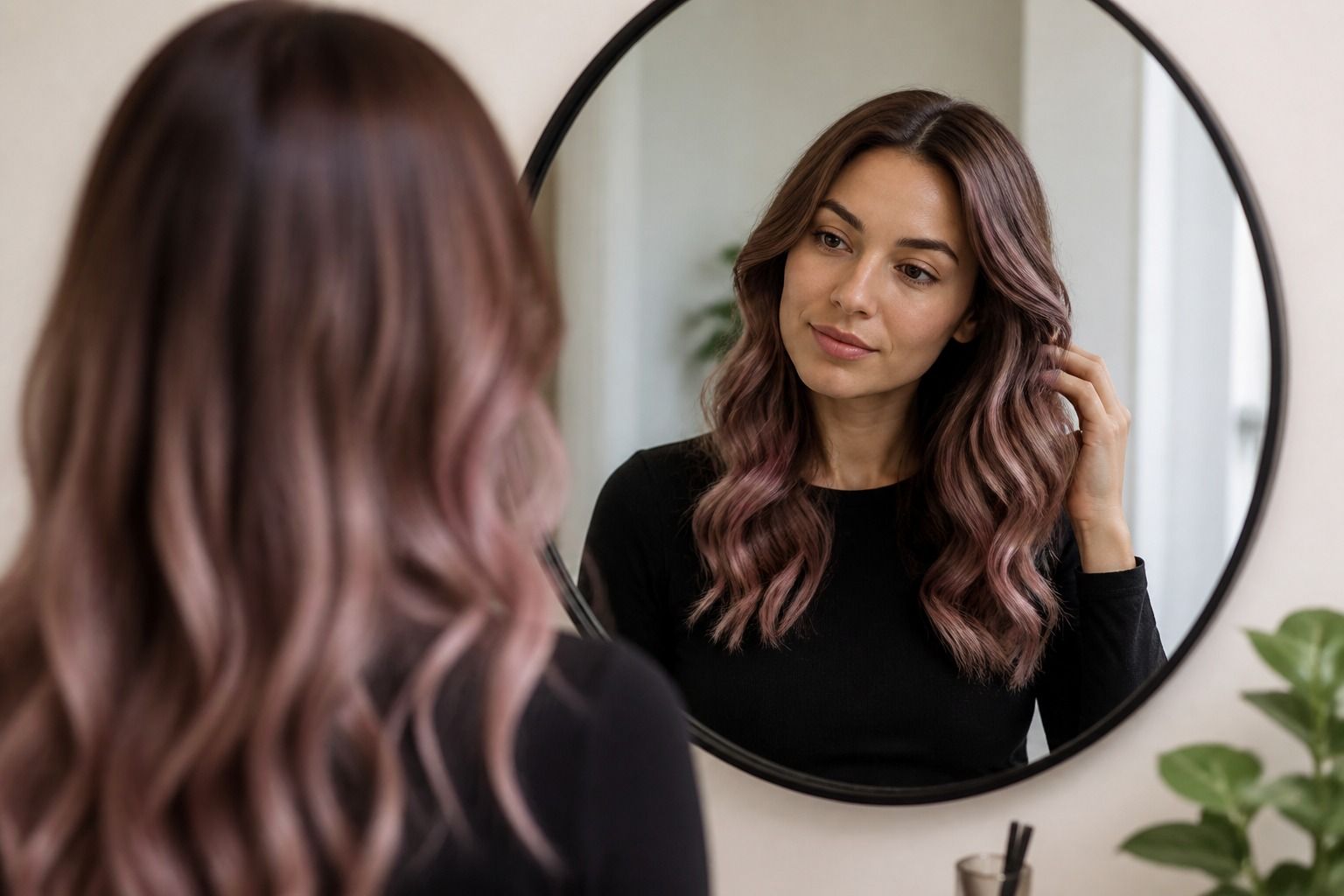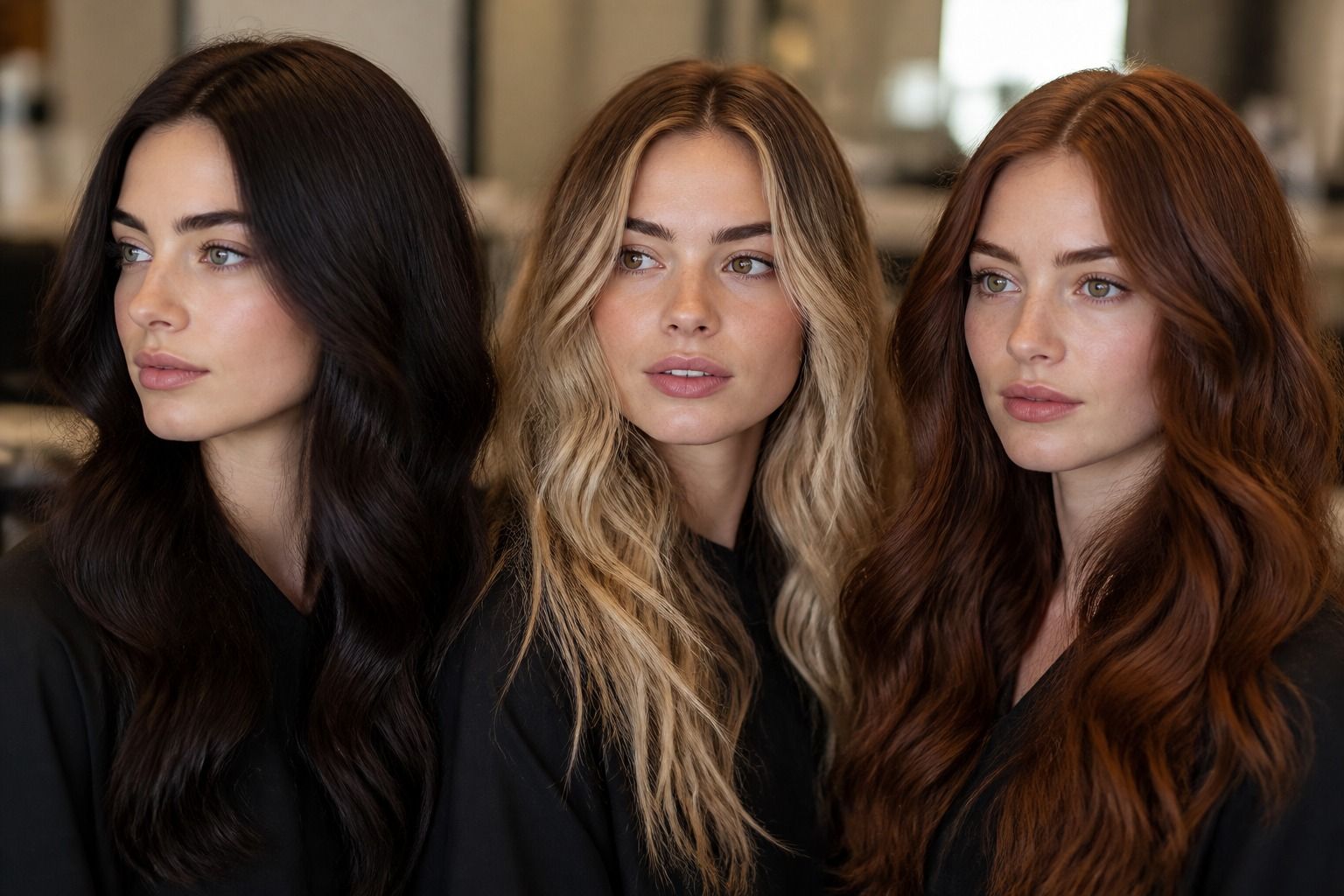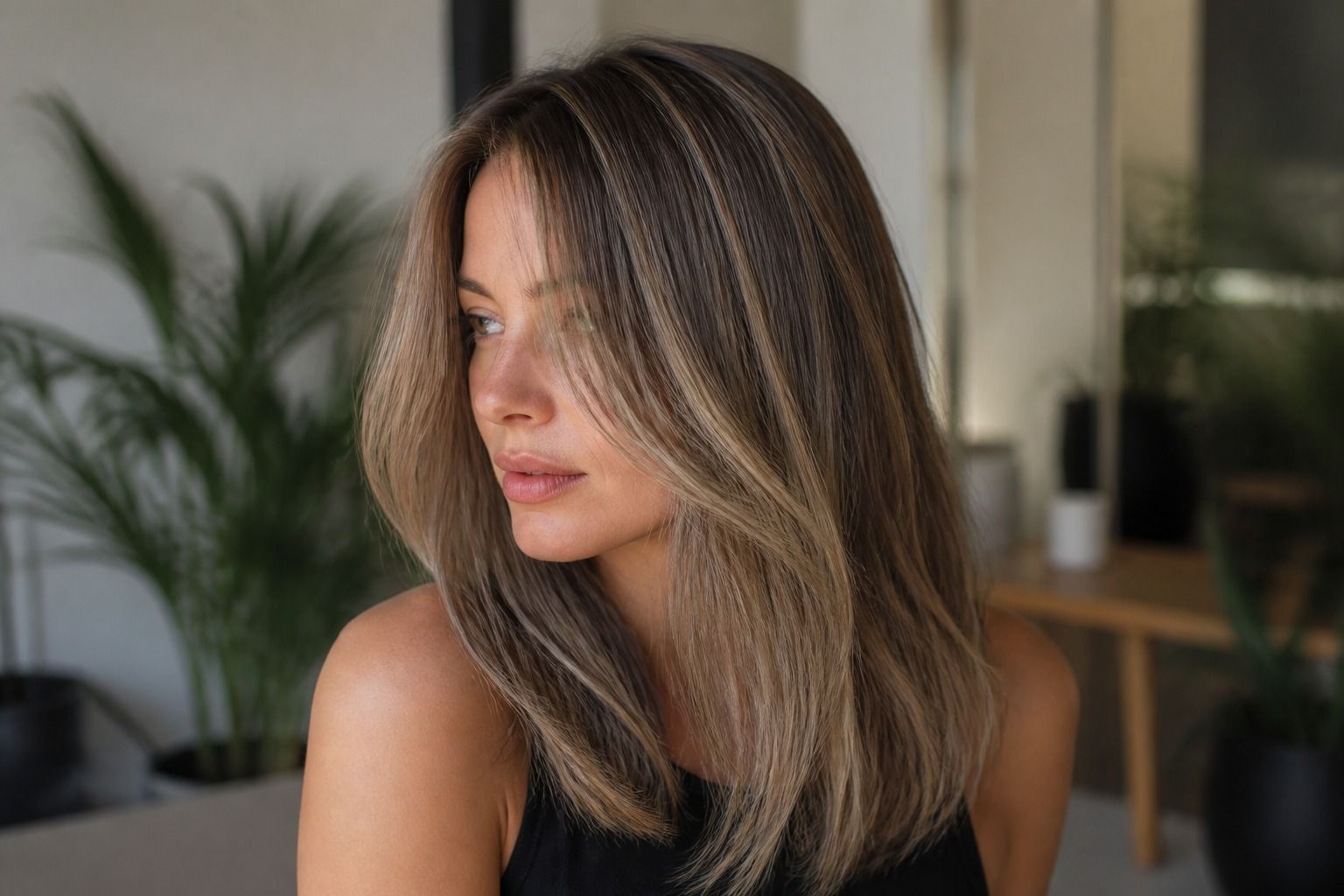
The most wearable cool summer hair colours are not necessarily the palest or most obviously ash-toned shades. They are the colours that still look intentional on a rushed Monday, after a few washes, and when your hair is tied back instead of freshly curled. The real choice is a balance between a cool finish, a forgiving root transition, and a haircut that does not demand a full styling routine every morning.
Start with the way you actually style your hair
A colour consultation often begins with a swatch, but daily life begins with the alarm clock. If you air-dry a shoulder-length bob, a dense block of icy blonde can look flat at the ends while a single dark brunette can make the regrowth line look abrupt. Cool summer hair colours usually work best when their softness is built into the placement, not just mixed into the formula. Think smoky beige, muted mushroom brown, ash light brown, dusty rose-brown, or a cool dark blonde with a little natural depth left at the root.
Look at the moments when your hair is least arranged. If you wear it in a low ponytail for work, keep the brighter pieces around the temples and through the upper lengths rather than scattering fine highlights everywhere. If you prefer a loose, air-dried wave, ask for colour that follows the movement of the cut. A few wider ribbons through the mid-lengths may read more naturally than dozens of tiny foils that only make sense after a blow-dry.
Texture matters as much as shade. Fine hair can lose visual weight when every strand is lifted to the same pale level, while thick hair may need a little tonal variation to avoid looking like one solid helmet of brown. Before choosing a colour, take a photo of your hair on an ordinary day: parting visible, ends uncurled, no salon lighting. That is the version the colour has to support.
Choose a root transition you can tolerate
Low-maintenance does not mean maintenance-free. It means the first centimetre of regrowth does not immediately turn the whole look into an appointment emergency. A cool summer client who wants a lighter result can often keep a natural or softly tinted root and place the brighter colour below it. The effect is gentler than a sharp all-over lift, especially when the natural base is medium brown or dark blonde.
Ask the stylist to explain the grow-out in plain terms. Will the root melt be darker than your natural hair? Will it fade warmer after several washes? Does the lightness begin at the part, the temples, or below the cheekbone? These details are more useful than a shade name. A mushroom-brown shadow root may blend beautifully on one person and look dull on another if the lengths are too flat or the brows are much deeper.
| Colour direction | Grow-out behaviour | Best everyday fit | Watch for |
|---|---|---|---|
| Cool dark blonde with a root shadow | Soft line as the natural base returns | Air-dried waves and loose layers | Too much ash can make the ends look grey |
| Mushroom brown balayage | Moderate contrast between root and lengths | Bobs, lobs, and low ponytails | Needs gloss when the brown turns dull |
| Muted beige highlights | Fine regrowth is less obvious than a full blonde lift | Fine hair with face-framing pieces | Very pale pieces may need brass control |
| Dusty rose-brown gloss | Fades gradually rather than leaving a hard band | Medium-length textured cuts | Colour may disappear quickly on porous ends |
There is also a practical question about how often you are willing to sit in a salon chair. If your answer is every three months or less, a solid cool blonde at the root is probably the wrong bargain. A dimensional formula can look slightly less dramatic on day one and considerably better in week ten. That is the trade-off worth making when the goal is hair you can live with, not just hair that photographs well under fresh toner.
Make cool tones last between visits
Cool tones tend to reveal every change in the hair fibre. As a porous end absorbs minerals, heat, and pigment unevenly, a clean beige can become yellow, a smoky brown can look reddish, and a dusty tone can simply wash away. The answer is not to use purple shampoo every time the colour looks different. Overuse can leave pale pieces dull and can make the surface feel rough, which then makes the colour fade faster.
Wash frequency is part of the colour plan. A gentle shampoo, lukewarm water, and a proper conditioner usually do more for a cool summer shade than a harsh weekly correction. If you swim, wet the hair with clean water first and rinse after the pool; chlorine is not the only problem, because repeated drying and rough towel handling can expose warmer underlying pigment. A shower filter may help in a hard-water home, but it cannot replace a gloss when the tone has genuinely shifted.
Heat styling creates another quiet maintenance bill. A curling wand used on damp or unprotected hair roughens the cuticle, and rougher hair loses reflective shine. Use lower heat where possible, let the hair dry fully, and keep the hot tool moving. A gloss treatment at the salon can refresh tone and shine without repeating a full lightening service, but it should be described as a refresh, not a permanent repair. The colour will still follow your washing and styling habits.
When brass appears only in a few face-framing pieces, correct those pieces rather than treating the whole head. A stylist can use a targeted toner, a cooler gloss, or a slightly deeper overlay on the porous sections. Blanket correction often makes the back too dark while the front remains difficult, and that is when a supposedly easy colour starts requiring more work.
Pair the colour with an easy haircut
The haircut decides whether your colour looks soft or messy on an ordinary morning. A blunt line can make a muted shade look polished, but it also shows every uneven end. Soft layers allow highlights and lowlights to move through the hair, which is useful if you want air-dried texture. The trick is to keep enough weight at the perimeter so fine hair does not turn wispy after the first wash.
For a bob, a cool summer palette usually benefits from clean shape and restrained brightness. Face-framing pieces can begin near the cheekbone or lower, depending on how much contrast you want around the eyes. On long hair, a few internal layers can give a cool brown or beige blonde enough movement without creating a curtain of disconnected short pieces. Colour and cut should be planned together; a highlight placed for long waves can land in the wrong spot when the hair is later cut into a chin-length shape.
Consider your parting too. A centre part exposes the root and makes the transition more visible, while a soft side part can break up a line that would otherwise look severe. This does not mean choosing a haircut to hide poor colour work. It means admitting that the same formula behaves differently when the hair falls in one direction every day. A good low-maintenance design remains convincing from the part, the profile, and the back.
Know when product is hiding a colour problem
Dry shampoo, texture spray, and a glossy oil can make a colour look finished for an evening. They cannot fix a tone that is too dark, a root that is too warm, or ends that have been lifted beyond what the haircut can support. If your hair only looks good after several products and a precise wave pattern, the issue may not be your styling skill. The colour may be asking for a level of polish that your routine does not provide.
Check the hair in three conditions: freshly washed and bare, lightly air-dried, and styled as you normally wear it. Notice whether the lengths look darker than the root, whether the face frame becomes yellow first, and whether the ends look transparent. Those observations give a stylist something useful to adjust. “It feels off” is valid, but “the ends look grey after washing and the front turns yellow after ten days” leads to a much better correction.
Sometimes the most sensible move is a small trim and a softer gloss rather than another round of highlights. Removing fragile ends can make the existing colour look richer, while a translucent toner can bring back the cool balance without adding more damage. The same logic applies to a colour that has faded too quietly: deepen selected lowlights or refresh the root instead of colouring every strand again.
Cool summer hair colours work when they respect the unglamorous parts of a routine: the wash day that runs late, the fringe that dries in the wrong direction, and the trim postponed for two extra weeks. Choose the root, tone, and haircut as one system. Then the shade has a chance to look good before the styling tools come out, which is the most useful definition of low-maintenance I know.