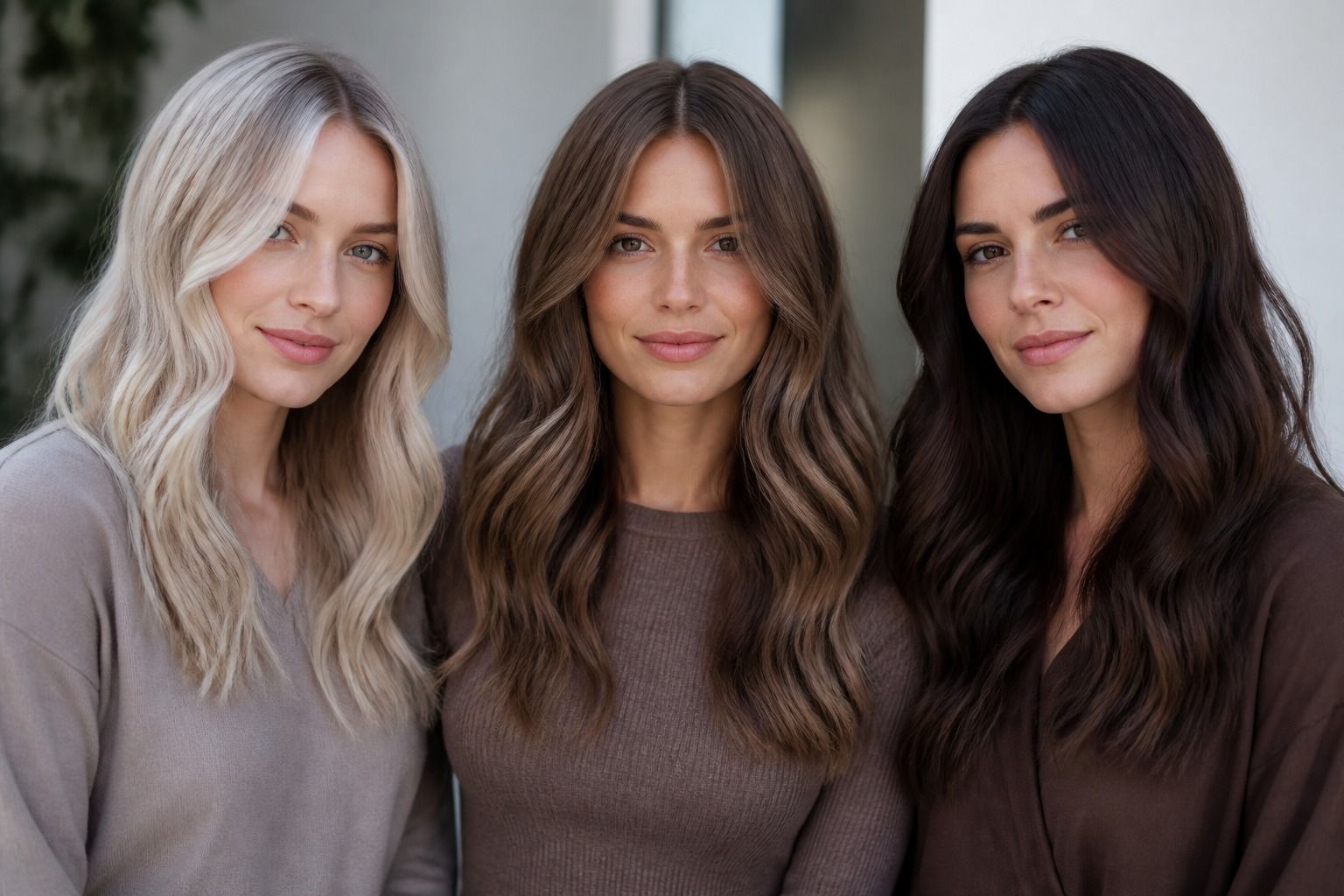
Choosing among cool summer hair colors is easier when you stop treating the seasonal label as a single shade. Light hair, medium brown, and deep brunette can all work, but they create different levels of contrast, demand different maintenance, and fade in different ways. The right choice depends on your natural value, the clarity of your features, and how much effort you want to spend protecting the finish between appointments.
Use three questions instead of one seasonal label
Start with value: how light or dark is the hair compared with the skin, brows, and eyes? Then look at saturation: does the color need to be smoky and softened, or can it handle a cleaner, clearer pigment? Finally check contrast. A shade may be cool enough in temperature but still feel wrong because the jump from root to highlight is too dramatic. These three questions are more useful than asking whether a color belongs to a named season.
Natural hair gives you an important reference point. Someone with dark ash brown hair can move toward a soft espresso without losing the quiet quality of the face. Someone with naturally light blonde hair may need only a cool beige gloss and a few low-contrast highlights. Previous color changes the calculation: artificial pigment, porous ends, and old balayage can make the same formula behave differently across one head.
Do the comparison in daylight and with the hair in its ordinary styling. A smooth salon blowout can make almost any shade look more even than it will at home. Check the root line, the interior, and the ends separately. If the ends are much lighter or more porous than the rest, a single all-over formula may create a patchy result. Depth is not only a number on a color chart; it is how consistently that value is carried through the hairstyle.
Light options for fine or short hair
Light cool summer hair colors can look airy on fine hair, cropped cuts, and soft bobs because there is less visual weight around the face. Cool beige, dusty blonde, and a muted ash blonde are useful starting points when the base is already light enough. The finish should still have dimension. A solid pale color can flatten a fine cut, while a slightly deeper root or a few low-contrast pieces gives the hair a clearer outline.
On a short haircut, the root line is visible every day, so the gap between natural depth and the chosen blonde matters. A root shadow that is too dark can create a stripe; one close to the natural level can make the grow-out look deliberate. Ask how the color will look after four weeks, not only on the day it is styled. Fine hair also shows dryness quickly, and repeated lifting can leave the ends unable to hold a toner evenly.
Light is not automatically low-maintenance. A pale cool shade may need regular glossing because yellow or beige warmth becomes obvious against a cool base. Purple shampoo can help with a temporary yellow cast, but it cannot fix uneven lift, brittle porosity, or a root line that was planned badly. If the hair is already fragile, a cool beige gloss over a slightly darker base may give a more convincing result than another round of bleach.
Medium shades offer the most flexibility
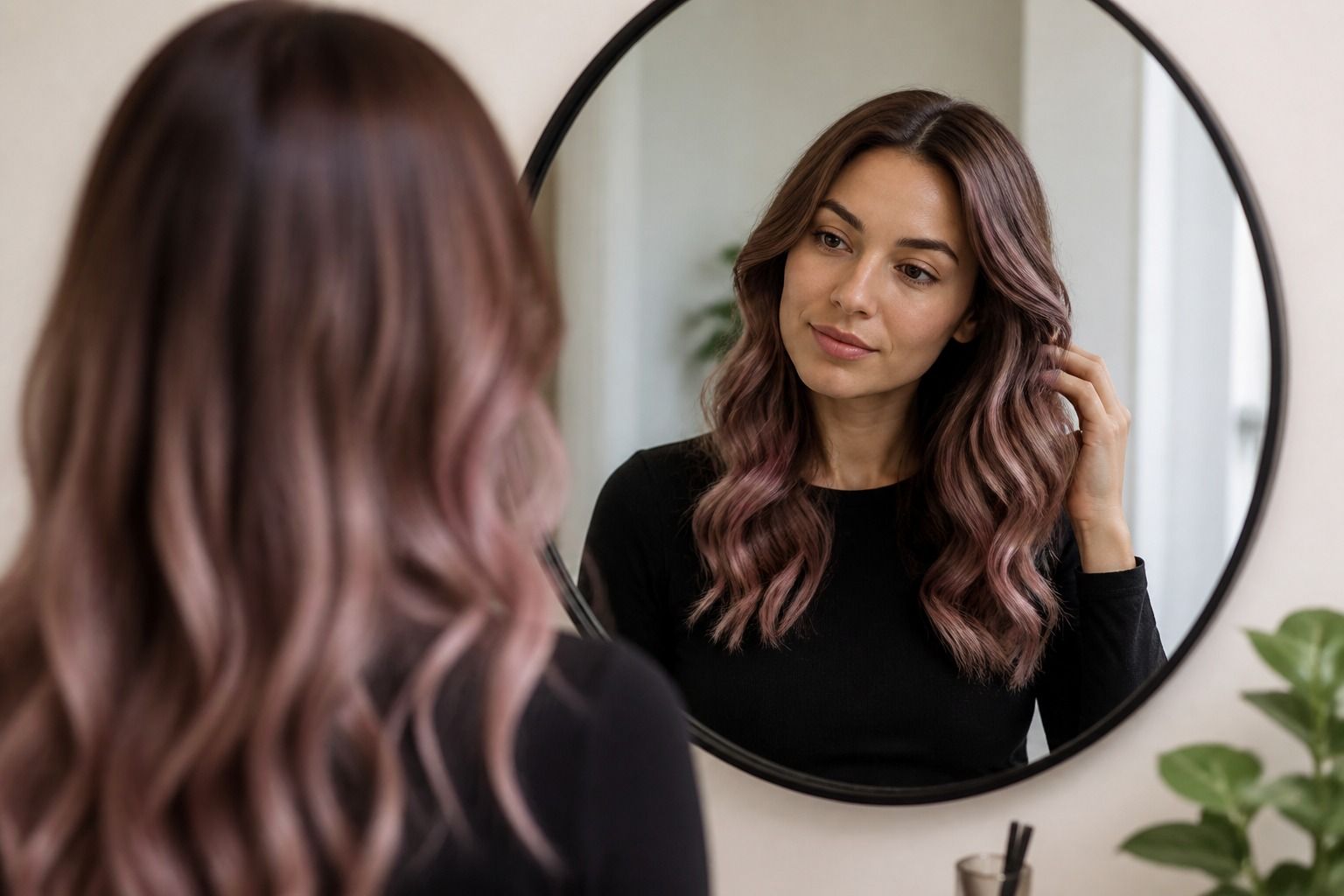
Medium brown is often the easiest depth for a soft cool palette. Mushroom brown, neutral ash brown, and a smoky taupe brunette can hold enough value to frame the face while staying less severe than a very dark shade. They also leave room for movement: a few low-contrast highlights can be added later, or the color can be allowed to fade without exposing a sharp line immediately.
| Depth | Useful directions | What to watch | Typical upkeep |
|---|---|---|---|
| Light | Cool beige, dusty blonde, muted ash | Yellow cast, fragile ends, dark root line | Gloss and careful tone refresh |
| Medium | Mushroom brown, ash brown, soft taupe | Flat saturation, uneven old highlights | Balanced root maintenance and occasional gloss |
| Deep | Soft espresso, cool brunette, smoked cocoa | Harsh contrast, visible fade at the root | Root blending and shine protection |
Medium depth is also forgiving when the haircut changes. It can support curtain bangs, a blunt bob, long layers, or a loose wave without requiring the color to be perfectly even in every section. If you want a visible change but do not want to commit to a very light result, this range gives the colorist room to work with placement and saturation rather than relying on maximum lift.
Check the spacing of highlights. On a medium base, many narrow bright pieces can turn into a high-contrast pattern, especially near the part. A few wider but softly toned sections may look calmer, or a gloss can pull existing highlights back into the same family. The aim is not to remove every difference. It is to make the differences feel connected when the hair moves.
Deep shades without winter-level harshness
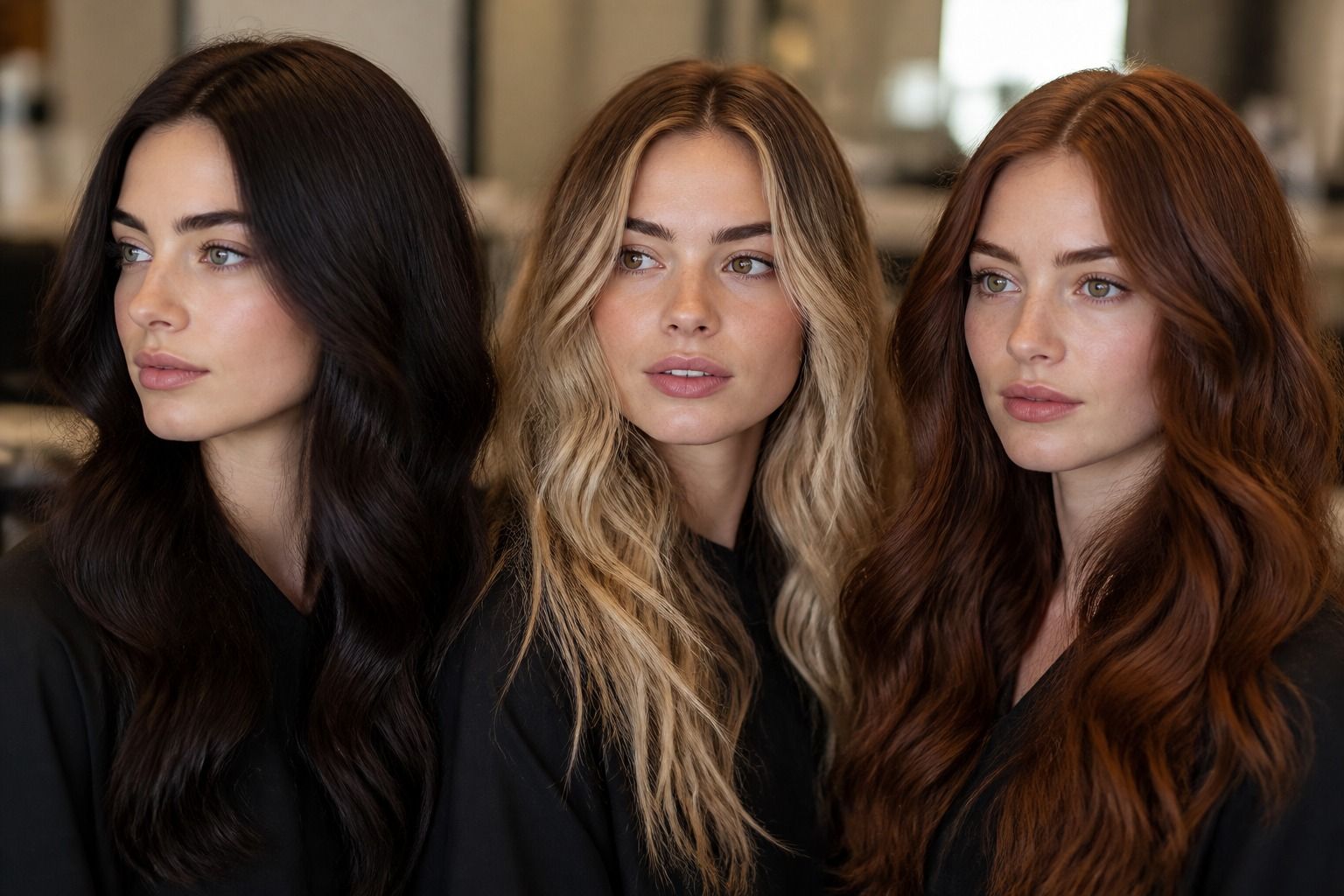
A deep brunette can suit a cool summer direction when it is softened through saturation and finish. Soft espresso, smoked cocoa, and a cool deep brown usually feel gentler than blue-black because they retain a little brown light beneath the surface. The distinction matters near fair or muted skin: a very pure black can create a hard border, while an espresso tone gives the eye somewhere to settle.
Before going darker, compare the proposed shade with the natural brows. If the hair is much deeper than the brows, the contrast may look intentional but demanding. If the brows are already strong and the eyes are clear, a deep shade may be easier to carry. Ask whether the formula is permanent or demi-permanent, particularly if you may want to return to a lighter color. Dark artificial pigment can make the next lift more complicated than the original decision suggests.
Deep hair needs shine to avoid looking dense. Porosity at the ends can make a dark color appear dull in one area and almost blue in another. A clear or neutral-cool gloss, regular conditioning, and restrained heat styling protect the surface better than adding more pigment every time the color loses reflectiveness. Deep does not have to mean flat; a small difference between the root, interior, and ends can keep the style soft.
Keep depth consistent as the color fades
Fading changes more than the hue. It can reveal a lighter root line, expose old warmth, or make porous ends look a full step paler than the middle. Take note of what happens after two or three washes. If the color is beautiful for a week and then becomes orange at the part, the issue may be the underlying level rather than a need for a stronger blue or violet product.
Seasonal upkeep should match the chosen depth. Light hair may need a toner when the base becomes too yellow; medium brown may need shine and selective refresh rather than an all-over application; deep brunette may need root blending while the ends are left alone. Reapplying color to already saturated ends can make them opaque and rough. A colorist should be able to explain which areas need pigment and which only need conditioning.
When you book the next appointment, describe the result in terms of value and behavior: ‘the ends went lighter,’ ‘the root line turned warm,’ or ‘the brown became too gray.’ Those observations are more useful than saying the color simply faded. Cool summer hair colors stay soft when the formula, the porosity, and the maintenance plan agree. Pick the depth you can keep looking intentional, not the one that photographs best on day one.