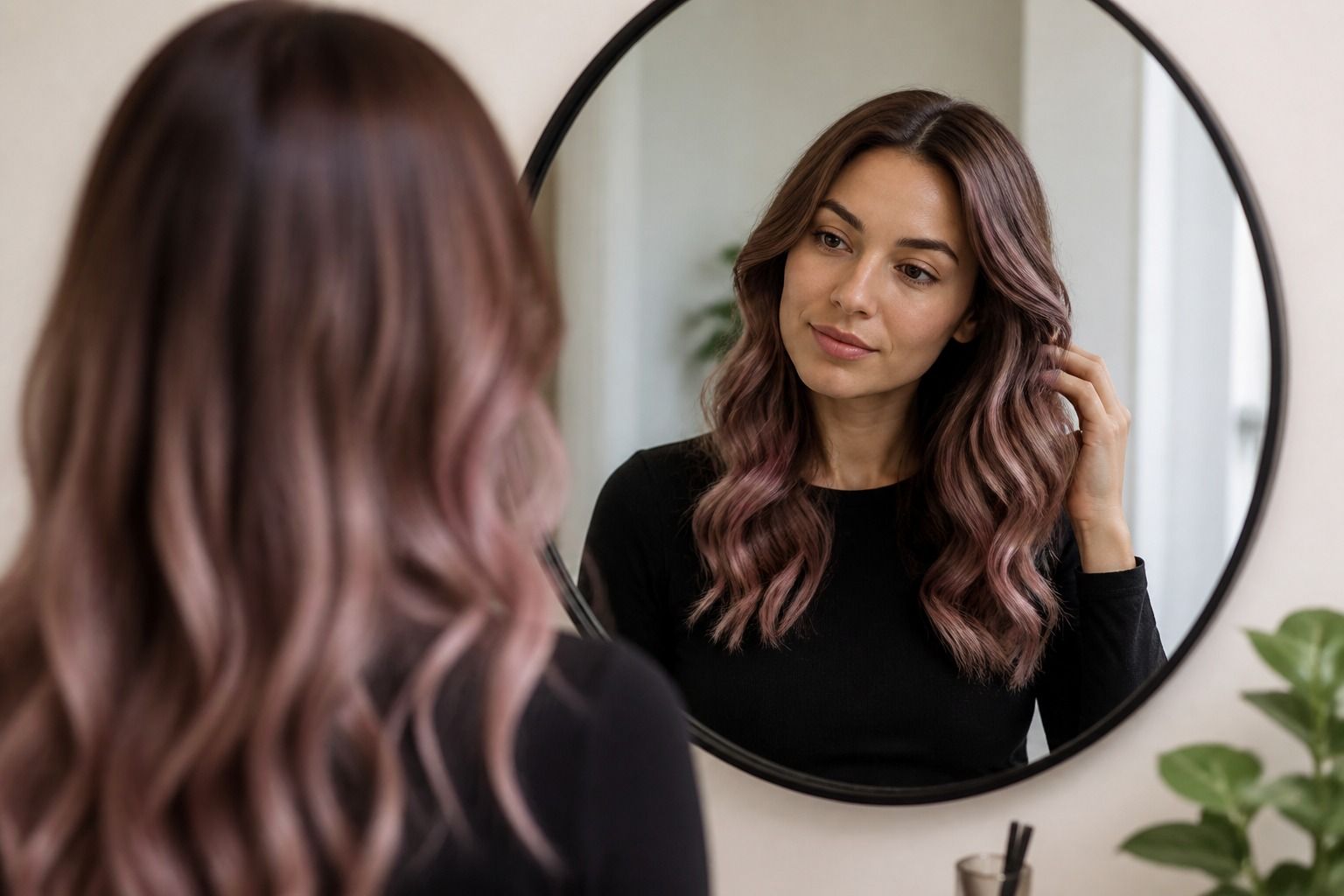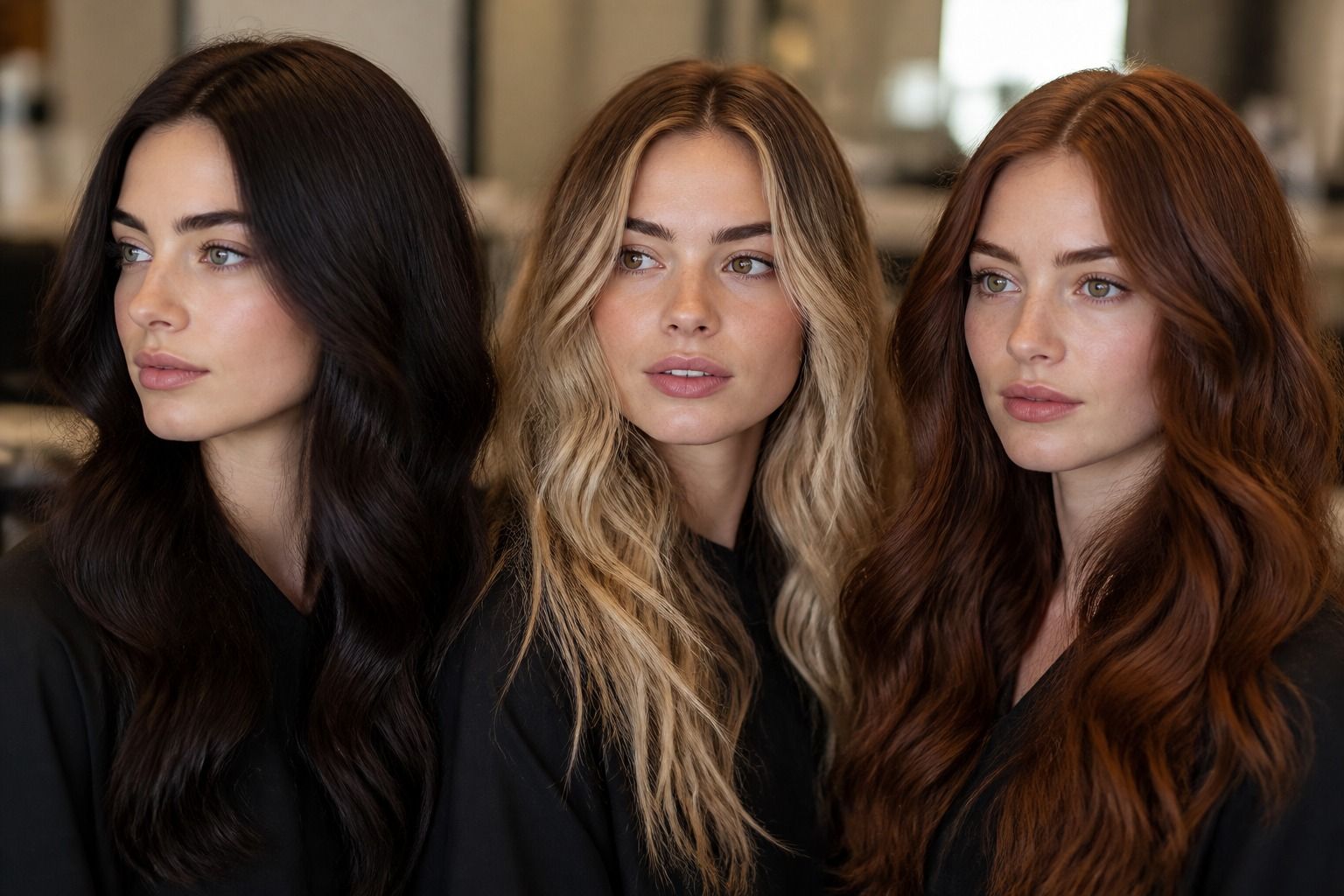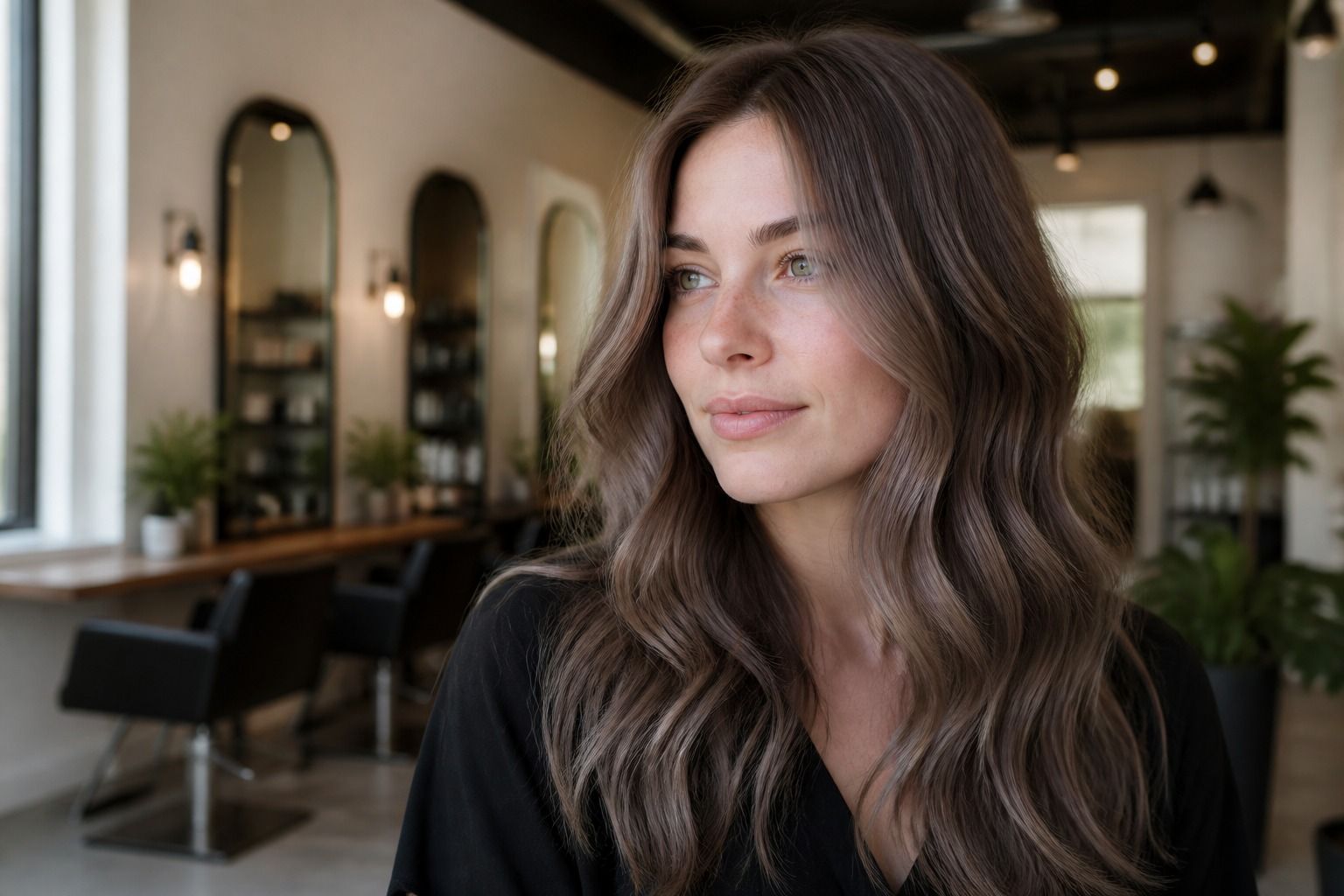
A cool summer hair color can be gentle, smoky, and quietly elegant, yet the wrong version can make the skin look tired within minutes of leaving the salon. The usual mistake is treating ‘cool’ as a synonym for pale or gray. A better choice balances temperature with depth, muted saturation, and enough contrast around the face to keep your features readable.
Cool is not the same as pale
Coolness describes the direction of a shade, not how light it is. A cool brown can be medium or deep, and a cool blonde can still have beige or smoky depth. If a colorist removes every trace of warmth and then lifts the hair too far, the result may read as blue cast or gray cast rather than refined ash. The hair is technically cool, but the face has lost the small amount of color that made it look rested.
Look at the skin in daylight before you decide that the answer is another ash toner. If the cheeks already look pink, muted, or slightly gray beside a white shirt, an icy front section may exaggerate that effect. If the skin looks clearer beside soft blue, lavender, or cool rose, a cooler direction may be right, but it still needs a believable value. The useful question is not ‘How cold can this go?’ It is ‘Which cool shade keeps my eyes, brows, and skin visible?’
Natural warmth also matters because it is part of the starting canvas. Dark blonde and light brown hair often contain gold, copper, or red underneath the surface. Trying to erase all of it in one appointment can create porous ends and a flat finish. A controlled amount of beige or neutral pigment may make the final cool summer hair color look softer, not warmer in a distracting way. I would rather see a clean mushroom brown with a little life than a perfect gray that makes the wearer reach for blush every morning.
Find the depth that keeps the face alive
Depth is the first practical check when a cool shade looks draining. Hold a photo of the proposed color beside a recent picture taken near a window, then compare the value of the hair with the brows and lashes. If the hair is several steps lighter than everything around the face, the features may disappear. If it is much darker, the contrast can become heavier than the soft seasonal effect you wanted. Medium depth is often the safest working range because it gives a cool tone somewhere to sit.
| What you notice | Likely issue | More balanced direction |
|---|---|---|
| Skin looks pale beside very light ash | Too little value and too much gray | Cool beige or a darker root shadow |
| Eyes look clear but the hair feels dull | Muted tone has become flat | Soft dimension through the mid-lengths |
| Hair looks harsh against a soft complexion | Depth or contrast is too strong | Mushroom brown with low-contrast pieces |
| Roots look disconnected after a few weeks | The starting level was ignored | A blended shadow close to natural depth |
For many people, ash brown, dusty blonde, and cool beige work because they retain a visible middle value. They do not depend on a dramatic light-dark jump to look intentional. A light-reflective gloss can add polish without pushing the whole head brighter. On short hair, keeping the root and the interior slightly deeper can give a pixie or bob enough structure; on long hair, a soft change through the lower half prevents the ends from looking like a pale curtain.
Ask the colorist to describe the starting level and the expected finished level in plain terms. ‘I want cool’ is incomplete if the natural hair is a level five brown and the reference is a level nine blonde. The lift, porosity, and previous color determine whether that picture is a same-day result, a staged plan, or simply the wrong reference. A realistic depth decision protects the face before any toner is mixed.
Use muted shades instead of flat gray
Muted saturation is what makes many cool summer hair color ideas wearable. It softens the intensity of a pigment without making the color lifeless. Think of mushroom brown, smoky taupe, cool beige, and dusty blonde as shades with a little air in them. They have enough neutral or beige support to reflect light, while their ash component keeps orange or bright gold from taking over.
Flat gray usually appears when the hair is very porous, the toner is too strong, or the same cool formula is dragged through ends that no longer need the same correction. Porous hair grabs violet and blue quickly, especially around the face and at the tips. That can make a fresh salon result look elegant in the chair but steely in the bathroom. A good formula may need different timing or dilution through the lengths, with a shorter gloss service on the ends.
Ask whether the desired finish should be smoky, beige, neutral-cool, or visibly silver. Those words describe different levels of saturation. Bring a photo where the hair is shown in ordinary daylight, not only a heavily filtered portrait. If your favorite reference has warm skin lighting, its ‘cool’ hair may be a balanced beige in real life. The more precisely you name the finish, the less likely the toner will be used as a blunt solution.
Place brighter pieces where they help
Brightness is useful when it is placed around the hairstyle rather than spread evenly from root to tip. A soft face frame can lift the area near the eyes, but a very wide or icy frame may create the same washed-out effect you were trying to avoid. On a shoulder-length cut, a few narrow pieces that follow the cheekbone and the bend of the fringe often do more than a full head of pale highlights. The placement should support the cut’s movement.
Ask for low-contrast highlights when the goal is softness. They can be one or two levels away from the base instead of a bright stripe against brown. Lowlights may be just as important, particularly if repeated lightening has removed the medium depth that gave the face definition. A root shadow can connect the natural color to a lighter length, but it should not be used to cover a mismatched lift forever; the transition still needs to be planned for grow-out.
Watch the face frame after styling, not only when the hair is brushed straight. Waves, curtain bangs, and a side part move the brightest pieces into different positions. I like to check the color with the parting the person actually wears, because a highlight hidden under the top layer is not helping the complexion. A thoughtful cool summer hair color looks coherent when the hair is tied back, air-dried, or parted in its ordinary way.
Correct a result that looks drained
If the new color makes you look washed out, wait before adding another strong cool toner at home. First identify whether the problem is depth, saturation, placement, or lighting. Take a daylight photo with no foundation, compare the hair near the face with the ends, and notice whether the issue is everywhere or concentrated in the front. A gray cast through all the hair needs a different conversation from a pale face frame that is simply too broad.
A colorist may soften an over-ashy result with a neutral-cool gloss, restore a little medium depth at the root, or add lowlights that bring back shape. That does not mean turning the hair warm or abandoning a cool undertone. It means replacing missing balance. If the hair feels rough, ask about porosity before asking for more lift. Damaged ends reflect light unevenly and can make even a well-chosen shade look dull.
For the next appointment, bring the original formula if you have it, describe how the color behaved after the first wash, and show the exact light in which it bothered you. Mention whether your natural warmth returned at the roots or whether the lengths turned blue-gray. The best correction is specific. A cool summer hair color should make the face easier to read, not require a daily rescue routine to keep it from disappearing.